
AI has become a standard feature across banks, investment platforms, insurers, payment services and lending products. Customers already interact with AI in search, e-commerce, workplace tools, media and messengers. As a result, they compare financial apps not only with other banks, but with the best AI interfaces they use every day.
AI is also becoming part of financial decision-making. According to the 2026 EY Global AI Sentiment Survey, 49% of consumers had used AI to support savings or investment decisions in the previous six months. The study covered 18,152 people across 23 countries. EY also found that 21% had used AI for financial product recommendations and 18% for budgeting, household finance or trading support.
The challenge is therefore no longer to add an AI banking assistant. It is to integrate AI into a responsible financial experience.
In another digital product, an inaccurate answer may be only an unhelpful suggestion. In banking, it can affect money, account access, security or an important financial decision. A strong AI-powered banking experience must provide reliable guidance, explain its recommendations and make the limits of automation clear.
Contents
AI features lose credibility when they look intelligent but provide little practical support. Several common problems turn an AI banking assistant into a showcase feature or a black box.
These gaps matter across AI in financial services. A retail customer may receive an unclear explanation for a declined payment. An investor may see a product recommendation without understanding its risks. A business client may be told about a tax or regulatory change without learning whether it applies to the company.
The CFA Institute describes this as the black-box problem: complex AI systems can make it difficult to understand how a decision was generated, assess fairness or meet regulatory requirements. Its 2025 report argues that explainable AI in banking and finance is important for compliance, institutional trust, ethical standards and risk governance. It also stresses that human oversight remains essential.
Trusted AI in banking should reduce uncertainty, not create new questions. Customers need to understand what the system knows, why it gives a particular answer and what they can do next.
The best AI practices in digital banking do not replace the interface. They make the next user action clearer, safer and easier to complete.
A useful assistant connects general information with the customer’s situation. It can explain why a payment was declined, how a fee was calculated or whether a regulatory change may affect a particular business.
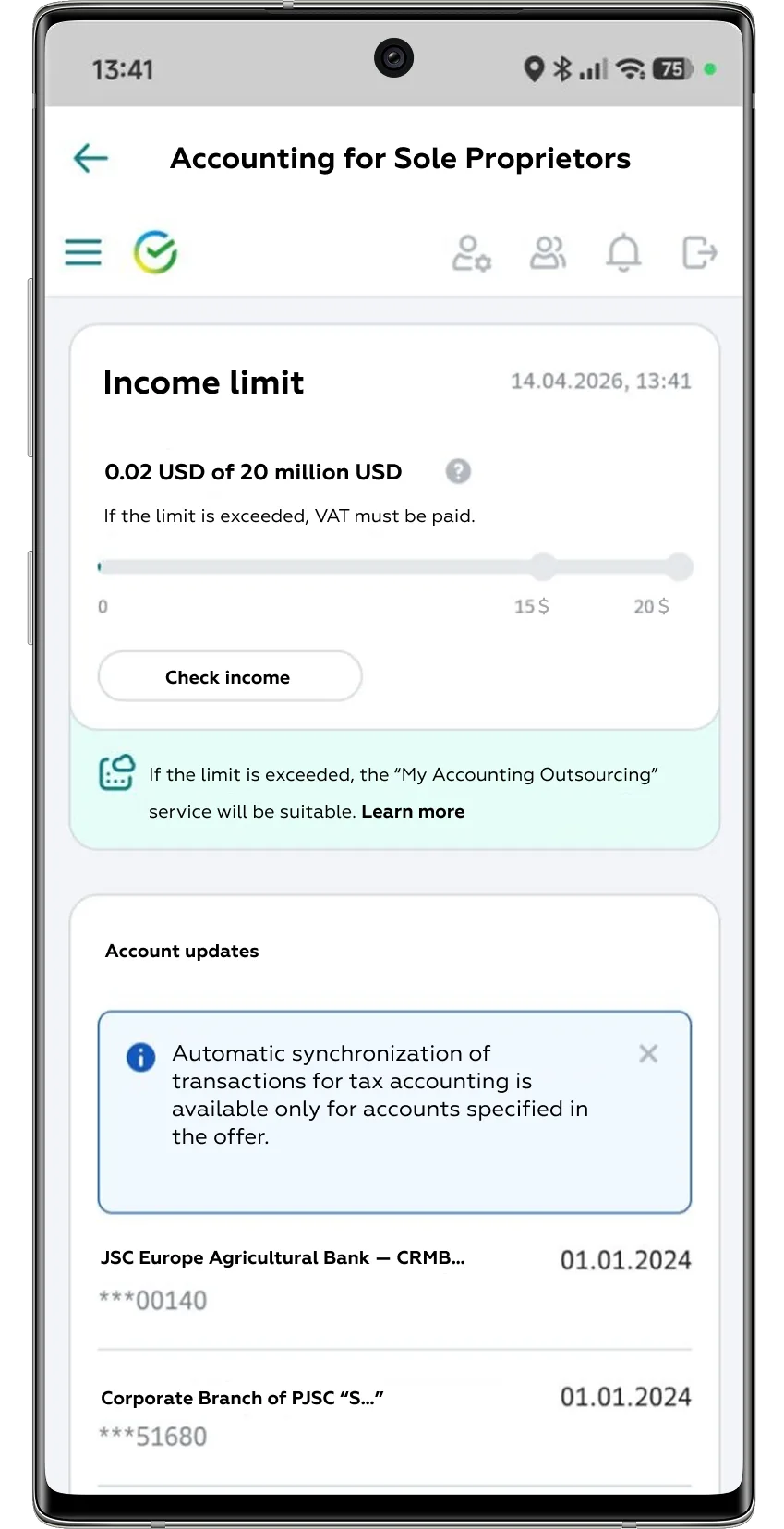
This requires the service to show which information was considered. Depending on the scenario, this may include account activity, selected products, transaction history, business profile or customer preferences.
The explanation does not need to expose the full model. It should give the user enough information to understand why the answer is relevant.
AI creates value when it helps customers evaluate consequences before they act.
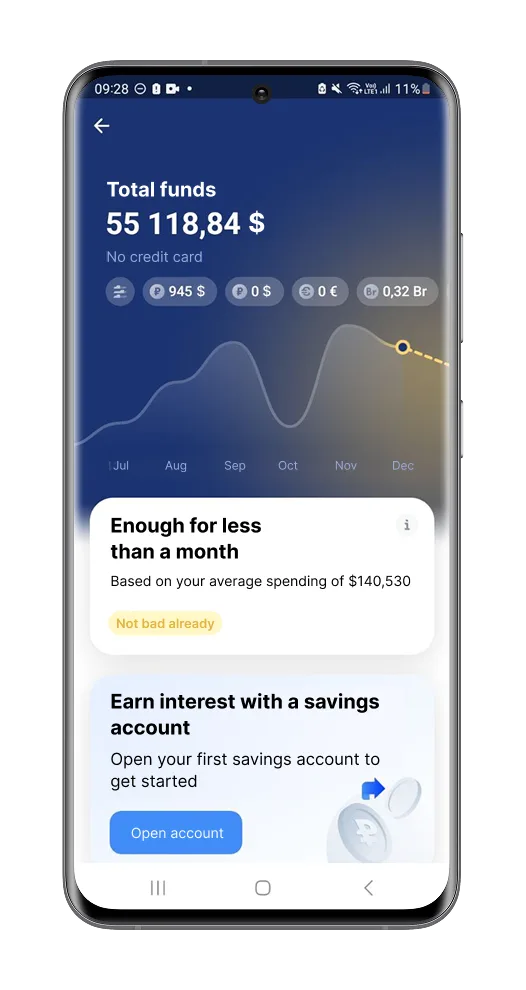
For example, it can:
A responsible AI in banking experience should show expected outcomes, important conditions and possible risks before the customer confirms the action.
AI should recognise where the customer is in the journey and use the details already available to the bank.
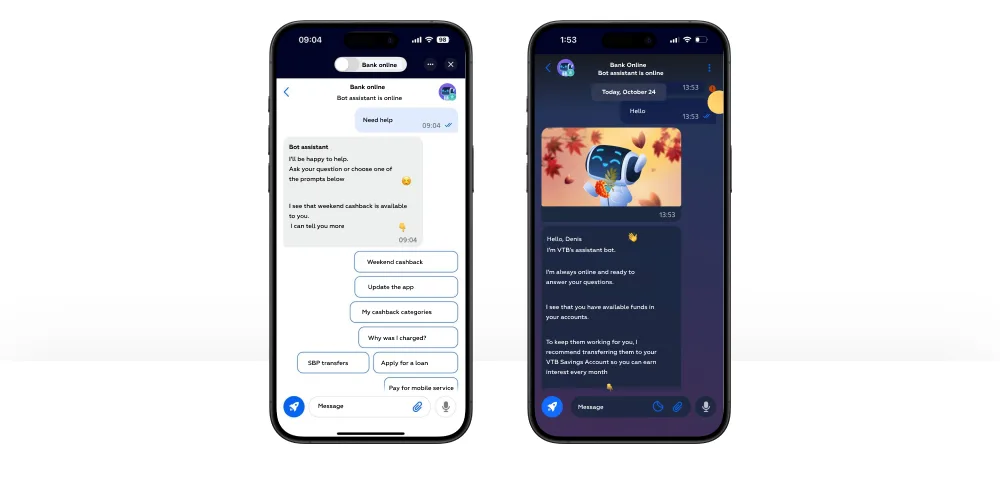
Instead of asking the user to describe a failed transaction from the beginning, the assistant can identify the relevant payment, explain the likely reason and suggest an appropriate next step. For business customers, it can connect a regulatory update with the company’s tax regime, industry, region or transaction activity.
When escalation is needed, the context should move with the customer. A human specialist should receive the conversation, relevant transaction details and actions already completed. The user should not have to repeat the entire problem.
Trusted AI supports decisions rather than making them silently.
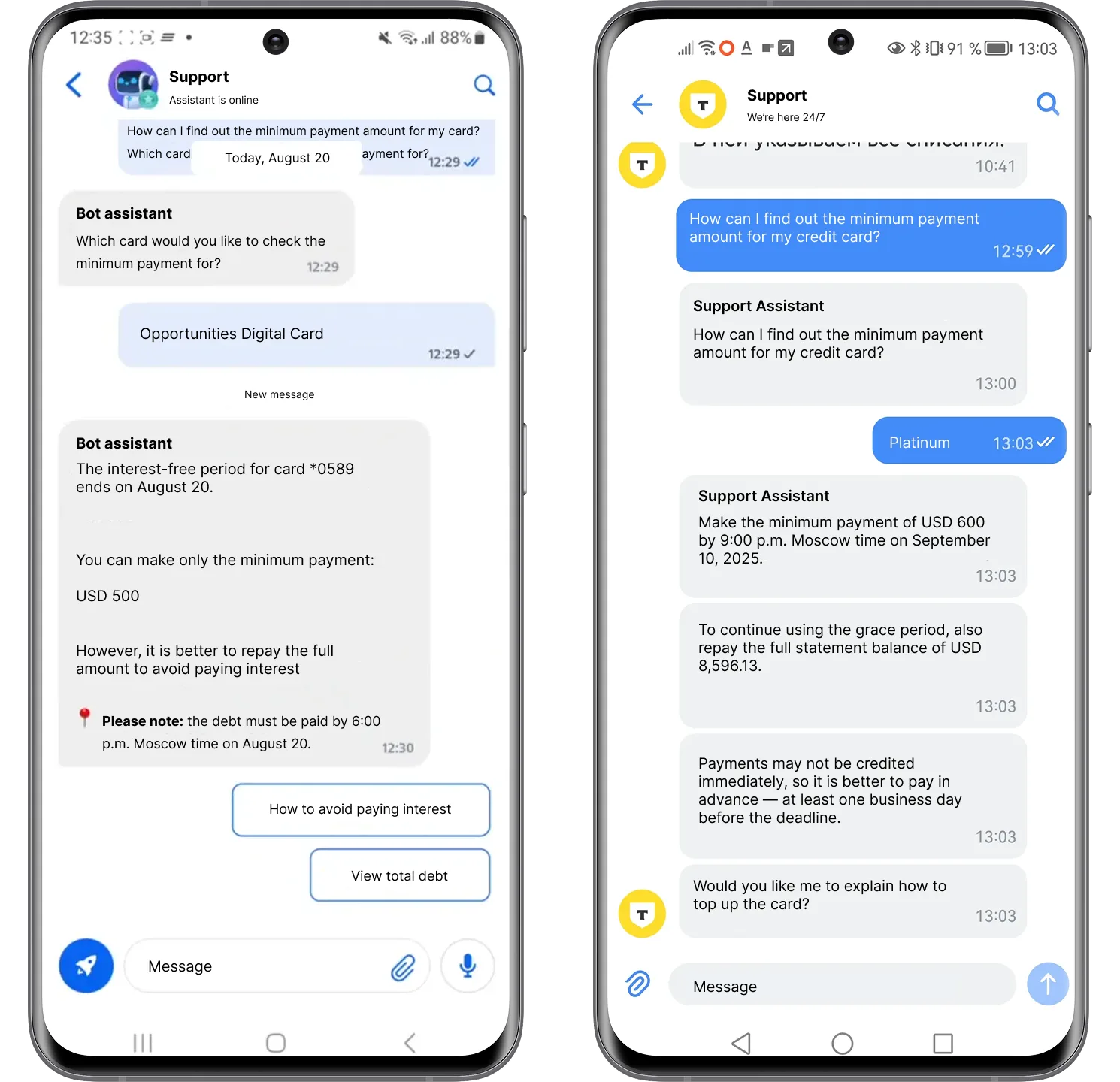
Customers should be able to:
Clear status messages are also important. The interface should show whether AI is analysing information, preparing a recommendation, waiting for confirmation or unable to complete the task.
The customer remains responsible for the final decision, but the bank remains responsible for creating safe boundaries around the experience.
Don’t miss new Markswebb insightsFollow Markswebb on LinkedIn to keep track of new articles, benchmarks, and practical UX observations from our research.
Before launching an AI feature, product owners, UX/CX teams and digital banking teams should check whether it improves the customer journey rather than adding another layer of complexity.
Markswebb’s analysis of the Jivo AI-agent onboarding journey shows that the value of automation depends on the experience around it. Users need to understand what the system requires, which data it uses, what will happen next and how they can test or correct the result.
The research highlights several useful design mechanisms: step-by-step onboarding, progress indicators, previews, test mode, action logs, visible system status and the ability to return to previous steps. It also shows that explicit confirmation before transferring data can strengthen the feeling of safety, even when it adds an extra step to the journey.
These principles are equally relevant to the digital banking customer experience. Powerful AI does not feel trustworthy when its setup, data sources, status, limitations or expected result remain unclear.
To help teams turn these principles into product decisions, Markswebb databases collect thousands of UX patterns from banking and investment services. Each example includes screenshots, screencasts and English descriptions of complete user flows, helping product teams compare approaches, find relevant references and make design decisions faster.
The future of AI in digital banking is not about giving customers more automated answers. It is about making those answers more relevant, transparent and useful.
AI should understand the customer’s situation instead of responding with generic advice. It should explain why a recommendation appears, what information it is based on and where its limitations are. And it should always leave people with a clear way to review, correct or escalate the decision.
The goal is not to make a banking product seem intelligent. It is to help customers understand their options, avoid unnecessary risk and move forward with confidence.
We respond to all messages as soon as possible.
We’ve evolved dozens of successful financial services and are eager to prove that our expertise can be implemented in other industries and around the world. Have a look at our success stories!