Contents
The moment a user decides to open a financial product—whether a deposit, a bank card, or another service—is one of the most critical in the digital journey. At this point, intent is high: the user has already chosen a bank and selected a specific product. The practices described below are based on insights from the Mobile Banking Rank 2025 study by Markswebb, which analyses how leading mobile banking apps design and deliver these high-intent moments.
However, this stage often reveals significant friction that can undermine both conversion and trust. Common pain points include excessive steps, unclear requirements, and gaps between online and offline processes. For example, a user may complete an online application only to encounter missing documents during branch verification, or face delays in card delivery without clear status updates. Such experiences break the sense of continuity and make the process feel more like a procedural hurdle than a service designed around user needs.
In practice, the quality of the product opening experience directly impacts broader KPIs. High friction leads to abandoned applications, increased support requests, and reduced likelihood of cross-selling. Conversely, a seamless process reinforces the perception of competence and reliability, encouraging long-term engagement.
A mature approach recognizes that “product opened” is not just a backend status—it is defined by the user’s perception of completion. Every touchpoint, from initial intent to actual product activation, shapes the overall impression of the bank and influences future decisions.
Despite differences between deposits, cards, or other financial products, the UX challenges at the product opening stage are remarkably consistent. Users encounter similar barriers regardless of product type, which indicates systemic issues in process design rather than isolated product problems.
Key recurring issues include:
These friction points turn what should be a straightforward task into a procedural challenge. Even users highly motivated to open a product can feel uncertainty, inefficiency, and a lack of control. As a result, banks risk abandoned applications, negative perceptions, and reduced engagement, while the user experience fails to support the intended journey from intent to activation.
A unified, coherent approach to the product opening journey is therefore essential. Addressing these recurring UX problems requires designing a process that anticipates user expectations, reduces redundant steps, and communicates clearly at every touchpoint.
Deposits are perceived by users as basic and low-risk financial products, which sets the expectation for a simple and transparent process. In reality, however, the UX often fails to meet these expectations, turning a routine action into a source of friction.
Common issues include:
This misalignment between expectation and experience undermines trust and can lead to abandoned applications. From a UX perspective, the deposit opening journey should actively guide decisions rather than test patience.
Best practice suggests that banks treat deposit opening as a guided experience: clear explanations of terms, transparent comparison of options, and immediate confirmation of account activation. When executed correctly, this transforms a routine product opening into a confidence-building touchpoint that reinforces the user’s perception of the bank as reliable and professional.
Opening a bank card is often presented as a fully digital experience, yet the journey frequently breaks down at the delivery stage. While the application may be seamless online, the user’s perception of completion depends on physically receiving and activating the card.
Common friction points include:
The result is a disjointed experience where the product is technically “opened” in the system, but from the user’s perspective, it remains incomplete. Delays and uncertainty erode trust and reduce the likelihood of engagement with other products.
A mature approach treats the card journey as an end-to-end process: the digital application, status updates, and physical delivery should form a single coherent flow. Only when the user perceives the product as fully active does the bank achieve the intended conversion and satisfaction outcomes.
In mature banking services, product opening is not implemented as a single procedural step. Instead, it emerges from design practices that reduce friction, enhance predictability, and increase user confidence. Several recurring patterns stand out in deposits and card issuance.
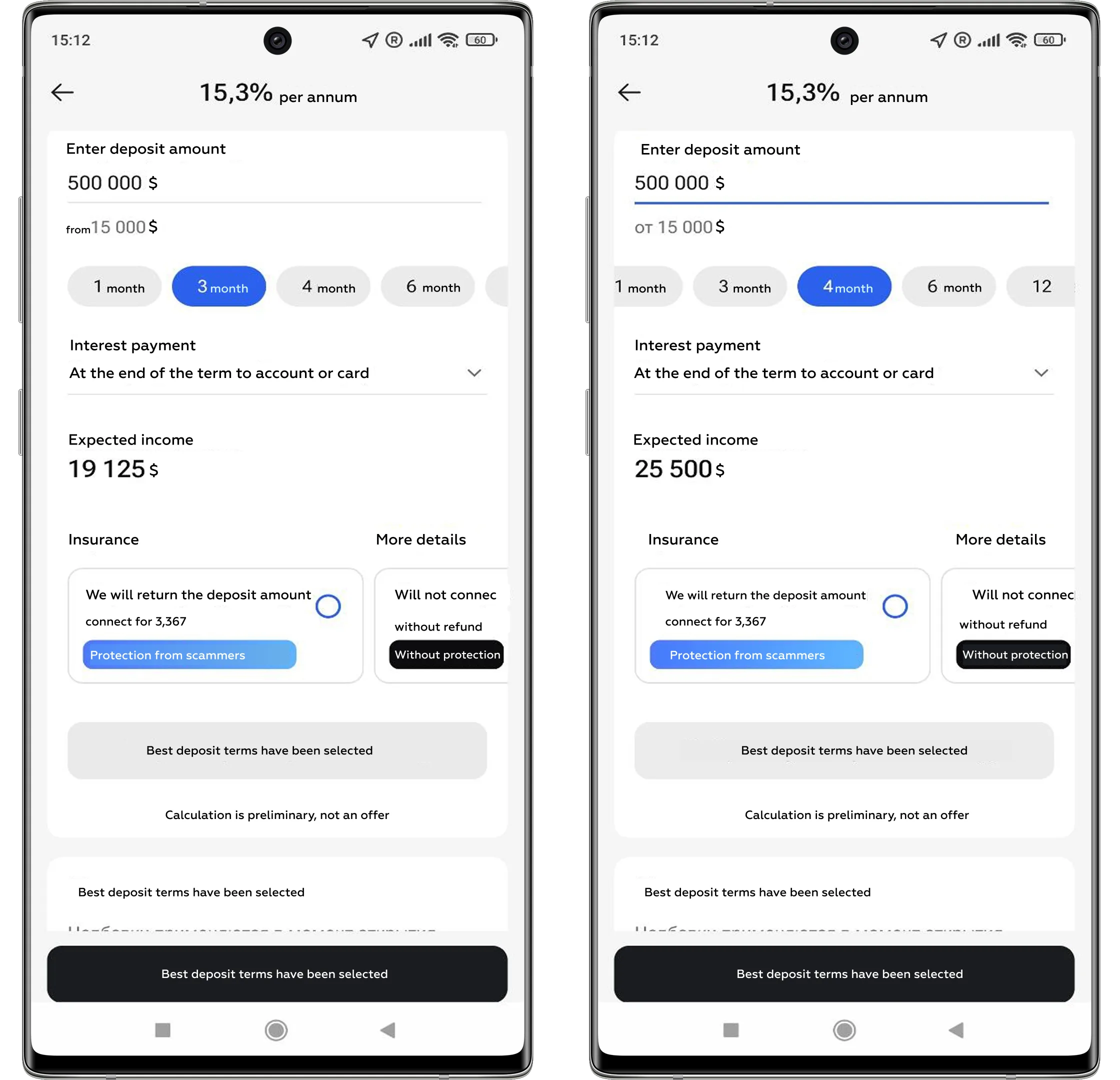
Smart deposit selection and protection
Advanced deposit solutions guide users toward optimal conditions automatically. Interfaces can suggest the best deposit period or rate and provide immediate confirmation when the selection matches the user’s goals. Additional layers, such as fraud protection, increase confidence and reduce perceived risk.
This approach lowers cognitive load, prevents errors, and reassures users, while banks benefit from higher conversion, fewer support requests, and stronger trust in their product.
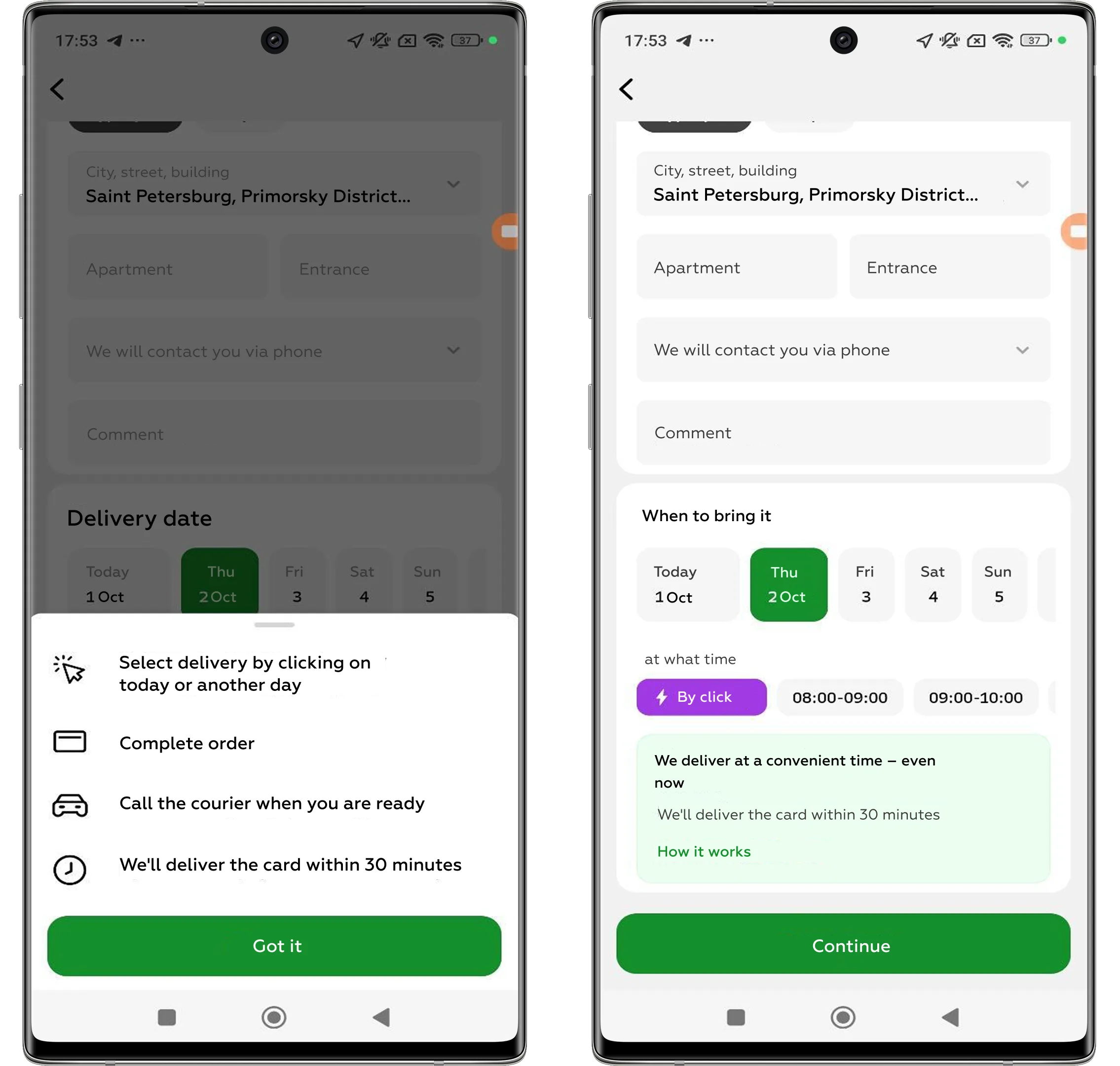
Click-to-deliver card service
Instead of fixed delivery schedules, leading banks offer flexible, on-demand courier services. Users can select a delivery time that matches their availability, track the courier in real time, and receive clear instructions about the process.
For users, this reduces uncertainty, avoids missed deliveries, and provides convenient communication channels with the courier. For banks, flexible delivery reduces cancellations, minimizes support calls, and increases successful card issuance.
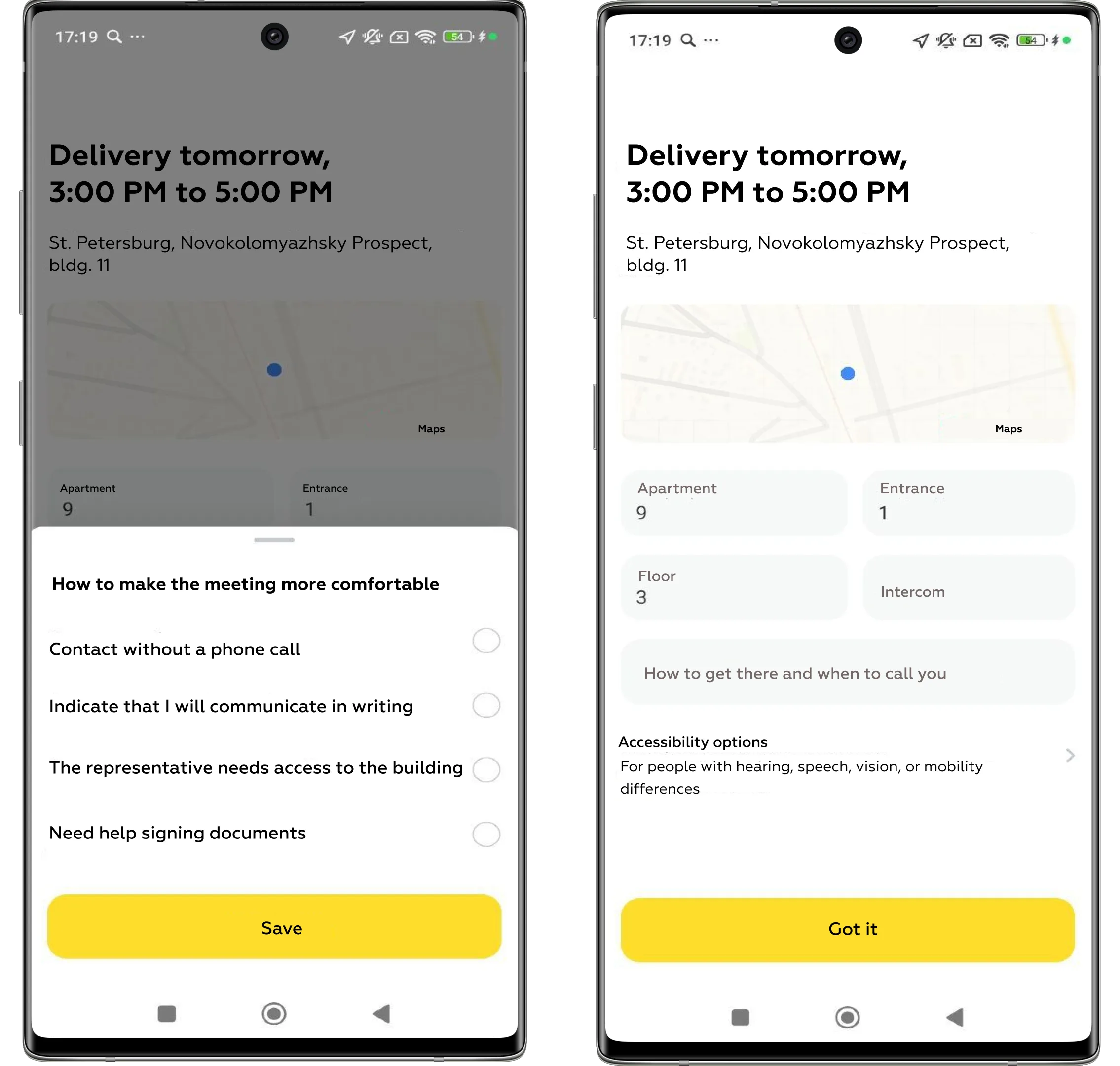
Inclusive delivery settings
Mature services also incorporate accessibility into delivery design. Users can indicate specific needs, coordinate delivery without voice calls, and receive assistance from couriers when required.
This ensures that card receipt is comfortable and safe for users with mobility, vision, hearing, or speech limitations. Banks benefit from fewer errors, lower stress on support teams, and higher satisfaction metrics across diverse customer segments.
The product opening journey—from deposits to card delivery—is a critical moment where user intent meets friction. Cross-product analysis and UX benchmarking reveal recurring challenges, including fragmented forms, unclear timelines, inconsistent processes, and gaps between digital and physical touchpoints. Leading practices focus on reducing cognitive load and guiding decisions, enabling flexible, predictable, and transparent delivery, and incorporating accessibility and inclusivity. Automatic selection of optimal deposit conditions with immediate feedback and built-in fraud protection simplifies the process and reinforces user trust. Click-to-deliver card services, real-time tracking, and clear communication reduce uncertainty, adapt to users’ schedules, and prevent missed interactions. Inclusive delivery options, including non-verbal coordination and on-demand assistance, ensure that all users, including those with mobility or sensory limitations, can receive products comfortably and safely.
Banks that treat product opening as a seamless end-to-end journey rather than a procedural checkpoint benefit from higher conversion, lower support costs, and stronger customer trust. Users perceive these services as reliable, convenient, and inclusive, which strengthens engagement and loyalty. Designing around intent, transparency, and inclusivity transforms product opening from a potential friction point into a key differentiator in retail banking UX.
Contact us via WhatsApp, send an email, or fill out the form below to learn more.
We respond to all messages as soon as possible.
We’ve evolved dozens of successful financial services and are eager to prove that our expertise can be implemented in other industries and around the world. Have a look at our success stories!