
In the increasingly competitive landscape of digital finance, user attention has become a scarce and valuable resource. Banks and fintech apps are no longer just tools for transactions — they are digital environments where behavior is shaped, habits are formed, and loyalty is built. In this context, gamification has re-emerged as a powerful UX strategy.
While early attempts often relied on superficial rewards like badges or points, today’s most effective apps embed purpose-driven game mechanics that align with users’ financial goals. The shift is clear: from cosmetic features to behavioral design that nudges users toward meaningful actions — such as saving regularly, investing with confidence, or completing complex onboarding flows.
At Markswebb, we’ve observed this evolution across dozens of mobile banking, investment, and digital ecosystem platforms in Europe and the UAE, drawing on insights from our European Digital Investment Map — a database covering more than 320 investment services across 32 countries. Gamification, when thoughtfully implemented, improves activation, retention, and product adoption — not by manipulating users, but by motivating them through progress, clarity, and satisfaction.
Contents
Our analysis of mobile banking and investment services reveals four high-impact gamification strategies. These approaches go beyond entertainment — they help users navigate complexity, stay consistent, and feel progress in their financial journey.
Many services use visual goal tracking to keep users motivated throughout their financial journey, such as saving for a specific target or completing budget milestones.
Progress indicators (e.g. savings bars, completion percentages) make progress tangible, while milestone markers and contextual nudges reinforce continued action.
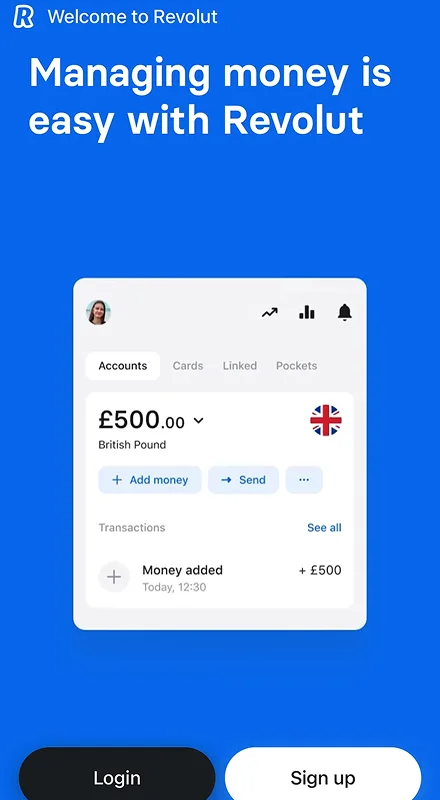
Example: Revolut displays interactive progress bars for savings vaults. Users can see in real time how close they are to reaching their target, with the interface updating after each deposit. This creates a sense of achievement and encourages consistent contributions.
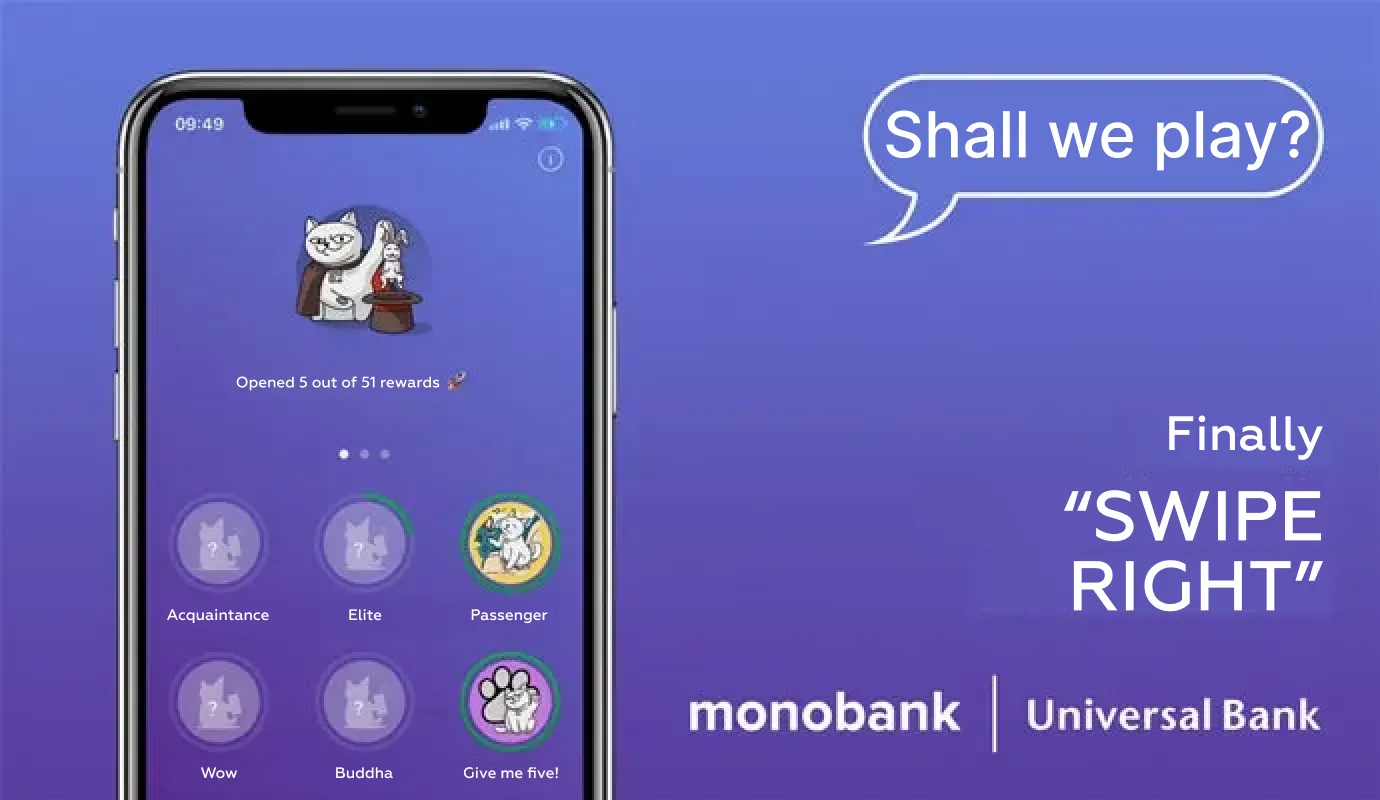
Some banks use achievement systems to reward users for completing onboarding steps, setting up key features, or verifying their profile.
Badges and visual rewards give immediate recognition for progress, motivating users to complete their setup and explore new features.
Example: Monobank (Ukraine) offers badges for completing specific actions in the app, such as setting spending limits or enabling notifications. These achievements serve both as onboarding guidance and as engagement boosters.
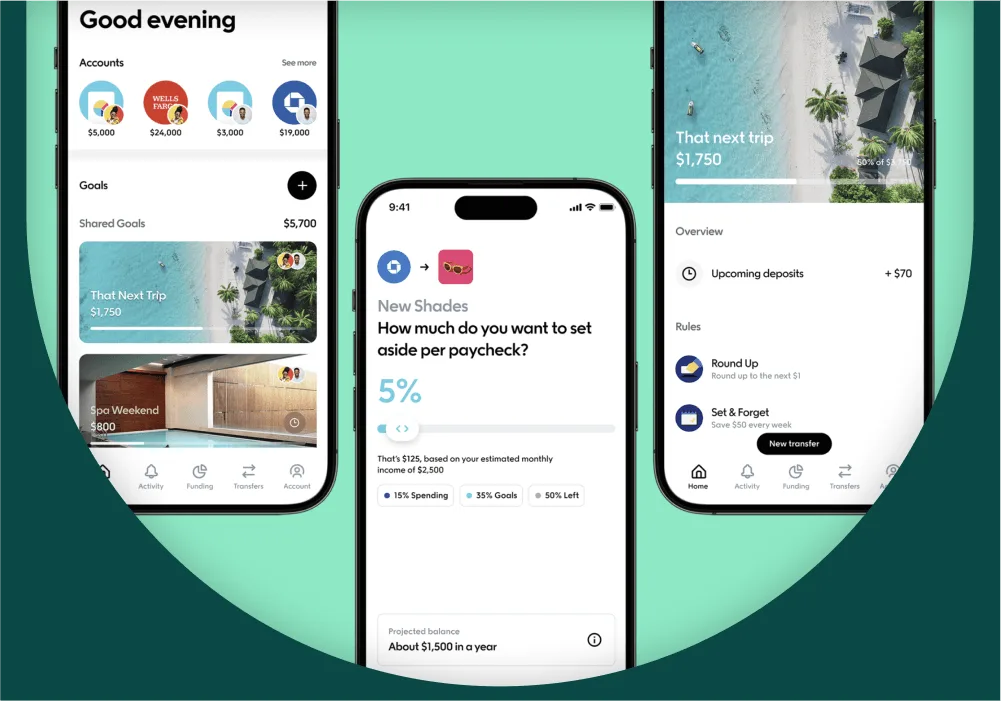
Group-based saving features encourage users to commit to financial targets with others, leveraging social accountability as a motivator.
Shared progress tracking lets all members see contributions in real time, making the process collaborative and rewarding.
Example: Qapital allows multiple users to save toward a shared goal, such as a group trip. Visual progress and group milestones keep participants motivated and engaged.
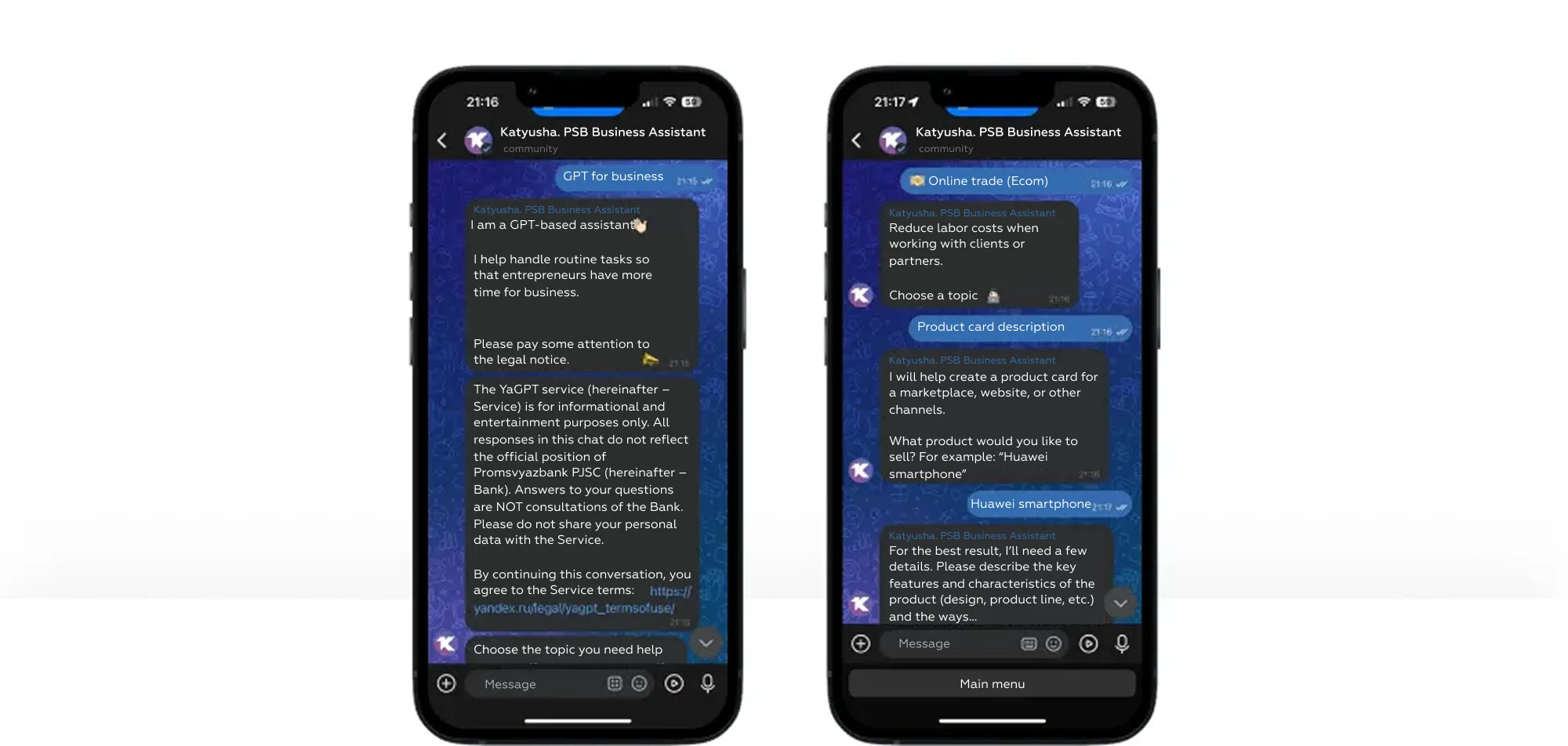
Conversational AI can be used not only for service automation but also for gamified engagement. Interactive dialogues, quizzes, and branching scenarios can make the banking experience more engaging and habit-forming.
Example: As described in Markswebb’s research on generative AI assistants, a leading bank’s chatbot evolved from a simple FAQ bot into a full-fledged digital assistant capable of guiding users through interactive, scenario-based financial tasks. Such flows can easily integrate game mechanics, like quizzes or progressive challenges, to deepen engagement.
Breaking down complex actions into clear, sequential tasks reduces cognitive load and encourages users to complete important but non-urgent steps.
Checklists and quest-like flows can guide users through security improvements, feature activations, or savings milestones.
Example: Current uses a points-based reward system where users complete actions (such as setting up direct deposits) to earn redeemable points. The app presents these as simple tasks with visual completion states.
Our research at Markswebb shows that while gamification can significantly improve user engagement, many financial products fail to realise its full potential because the mechanics are misaligned with the context of money management. Unlike in gaming or lifestyle apps, where novelty alone can keep users engaged, financial services require a careful balance between motivation, clarity, and trust.
The first step is ensuring that gamification delivers real financial value. Cosmetic elements may catch attention, but they rarely sustain behaviour change unless tied to tangible benefits — like higher interest rates, lower fees, or new feature unlocks.
Transparency is equally important. Users must clearly understand how progress is measured, how rewards are earned, and what actions are required to achieve them. This avoids confusion and builds trust.
Gamification should also be integrated into primary user flows so that it enhances core financial tasks — not act as a separate, disconnected layer. For example, progress tracking could be embedded directly into a savings dashboard.
Different users respond to different triggers, so mechanics should be adapted to user archetypes — goal-driven users may engage with progress milestones, while exploratory users may prefer learning-based gamification.
Finally, avoid reward fatigue. Spacing out challenges and rewards ensures that each achievement feels earned and keeps the user motivated over the long term.
Gamification in financial services is no longer about superficial engagement. The most effective implementations are anchored in user psychology and product strategy — helping people feel capable, consistent, and in control of their financial actions.
At Markswebb, we see three clear patterns that distinguish effective gamification:
For product teams, gamification offers a way to translate product friction into momentum, and passive users into active ones — especially in onboarding, savings, investment education, or feature activation.
We respond to all messages as soon as possible.
We’ve evolved dozens of successful financial services and are eager to prove that our expertise can be implemented in other industries and around the world. Have a look at our success stories!