
Contents
In many customer-service businesses — such as restaurants, salons, clinics or hotels — every extra touchpoint or manual step in communication adds time and cost, and impacts conversion.
AI agents hold the promise to streamline and automate those interactions: instead of relying on live staff, businesses can deploy agents that handle bookings, enquiries, scheduling or basic customer communication — reducing friction and manpower needs while staying always available.
This shift transforms how services interact with clients: the client no longer navigates through menus or forms, but simply expresses their need — and the AI agent acts.
Across many AI-agent platforms, the promise is similar: “connect an intelligent phone or chat agent in minutes.” But in practice, even strong underlying technology fails if the onboarding path is unclear, fragmented, or requires technical knowledge that typical service businesses don’t have.
Our analysis shows that the real differentiator is not the model’s intelligence, but how quickly a business can reach the moment of first value — a working agent that handles real requests.
If teams cannot understand what data is required, how long setup will take, or what exactly the agent can automate, even an advanced system will be abandoned early.
For AI agents to scale, the setup experience must feel like configuring a simple SaaS tool, not implementing enterprise software.
By walking through the entire consumer journey — from the service’s homepage to a fully functional agent — we identified recurring points where users get stuck or lose confidence. These barriers appear across markets and product types, not tied to a specific region.
Many platforms promise “instant setup,” but do not specify what “instant” means, what inputs will be needed, or which scenarios the agent can actually perform.
For a non-technical user, unclear expectations lead to early frustration and drop-off.
Businesses often face:
Without reassurance or transparency, businesses hesitate to continue.
Once onboarding starts, users frequently see:
This uncertainty increases the perceived effort and risk.
Businesses want to test the agent before making it live, especially when it interacts with CRM or booking systems.
When test mode is missing or poorly implemented, users fear breaking workflows — and stop the setup process entirely.
Our evaluation shows that the long-term success of AI-agent platforms depends far more on UX foundations than on model sophistication. Even strong AI models underperform when the onboarding experience is unclear or cognitively demanding. Below we outline the core design principles that consistently determine whether small and mid-sized service businesses can actually adopt and operationalize AI agents.
For many businesses, this is their first encounter with AI automation. They need a clear picture of the journey before they commit time or sensitive business information.
Platforms that succeed do not hide complexity behind slogans. Instead, they offer transparent expectations from the first screen:
This early transparency reduces anxiety about “unknown effort” and minimises the risk of early abandonment. It also frames the agent as a predictable workflow rather than an unpredictable black box.
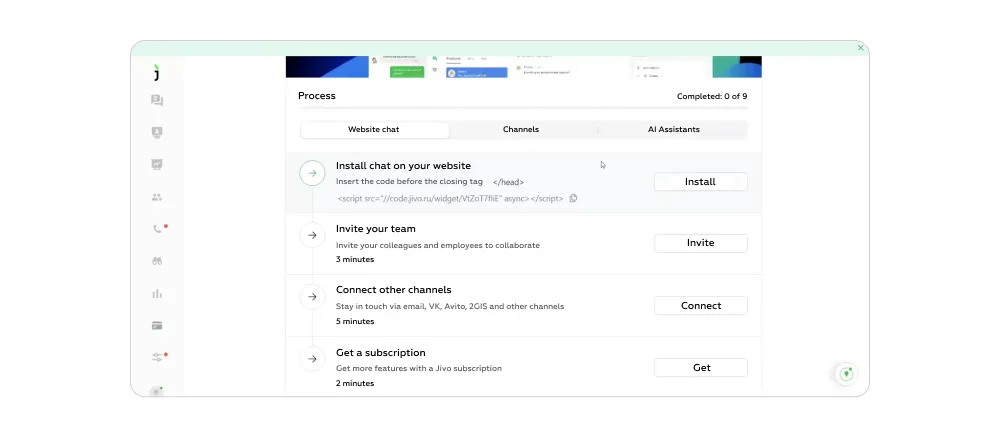
Once users begin onboarding, they expect guidance that reduces cognitive load and removes guesswork. Effective platforms treat onboarding as a tightly orchestrated, linear journey—not a loose set of disconnected forms.
High-performing flows include:
This transforms onboarding from a potentially stressful technical task into a guided setup that even non-technical users can complete with confidence. It also reduces support load because fewer users get stuck at predictable friction points.
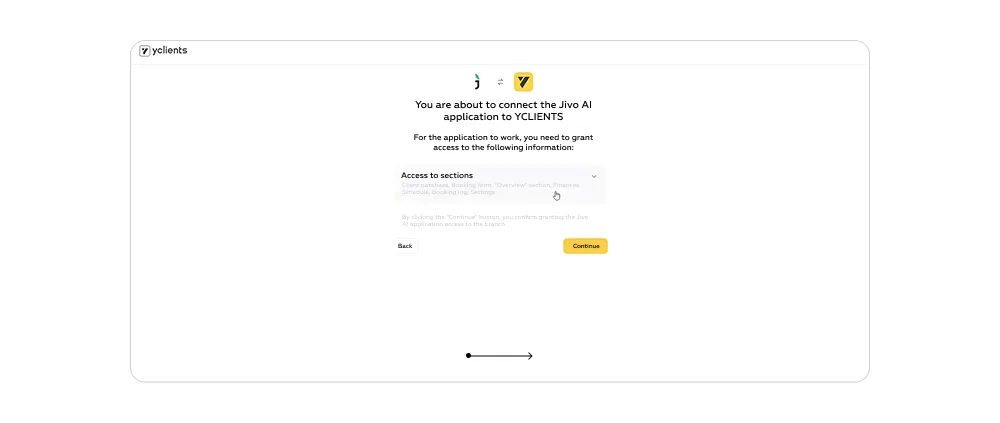
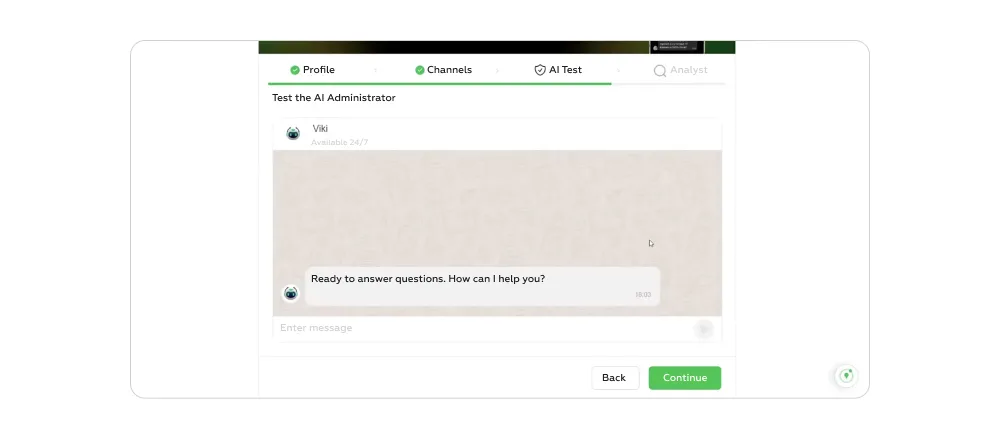
Before exposing customers to an AI agent, businesses want certainty that nothing will break: no incorrect bookings, no unexpected messages, no CRM corruption.
A well-designed testing environment becomes one of the strongest adoption drivers.
Successful platforms provide:
This reduces psychological risk and makes the technology feel safer, more understandable, and more controllable. Without this sandbox layer, many businesses simply never proceed to activation, regardless of how powerful the model is.
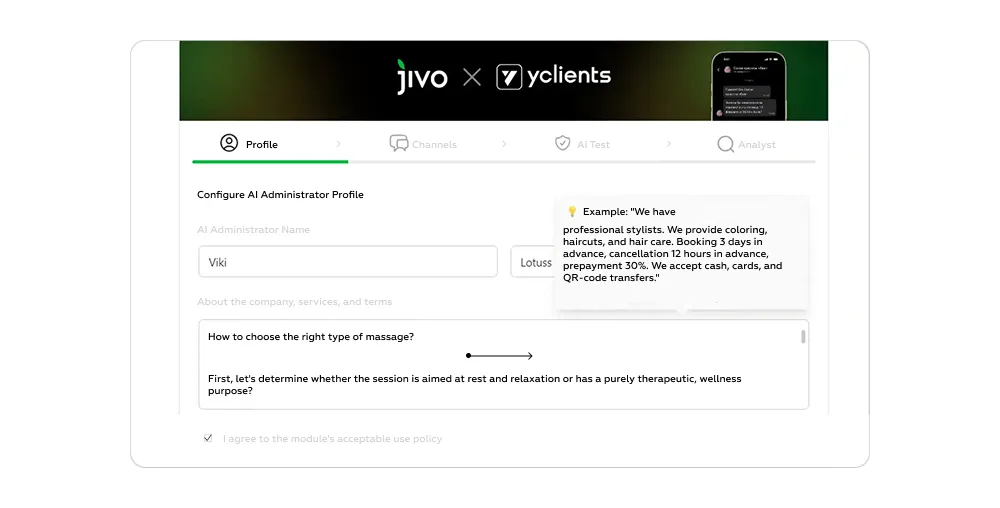
AI agents are not static; they require iterative refinement. But for businesses without AI expertise, training can feel opaque or intimidating.
Platforms that perform well remove this opacity through clarity and structure.
They explicitly communicate:
Providing templates, adjustable examples, auto-complete suggestions, and “before/after” previews dramatically reduces errors and accelerates learning. It also builds trust, as users see a direct cause-and-effect relationship between their inputs and the resulting improvements in the agent’s behaviour.
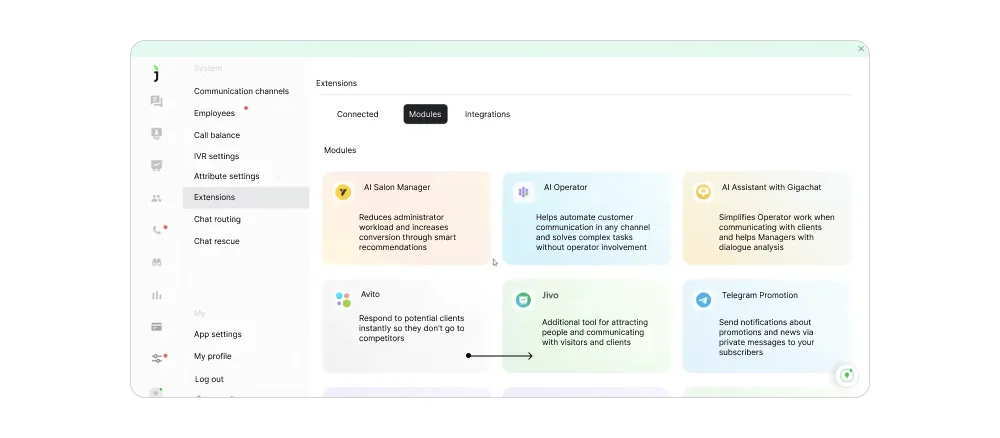
Not all businesses want or need full automation on day one. The ability to start small and expand over time makes adoption far more realistic.
This flexibility is especially important for businesses with existing tools or legacy systems.
Strong platforms typically offer:
A modular ecosystem reduces commitment risk and allows teams to experiment before investing fully—growing their use of AI in a way that matches their operational realities.
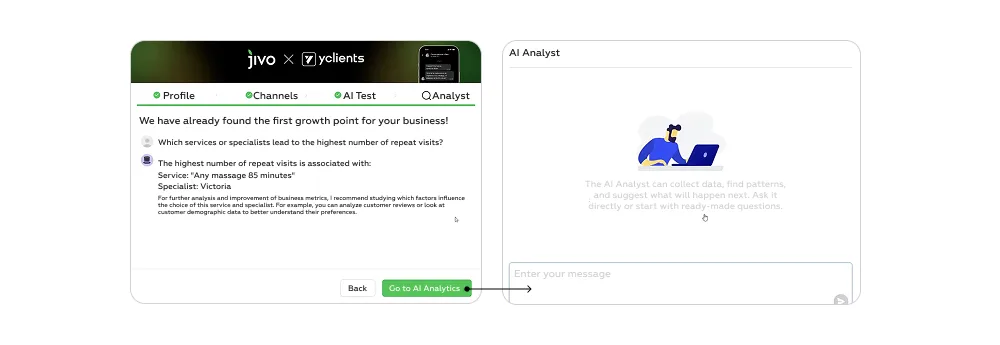
Onboarding is not linear for all users: some stumble at specific steps, others need reassurance, and some require immediate clarification to avoid abandonment.
The most effective solutions embed support contextually, for example:
This avoids the typical “support desert” where users must leave the flow to search for help, losing momentum and confidence. Instead, assistance becomes a natural part of the onboarding journey.
AI agents promise to automate customer communication and reduce operational load — but their real-world effectiveness depends on how easily businesses can start using them.
When the setup path is unclear, when users don’t know what to expect, or when testing feels unsafe, adoption stops long before the agent shows its value.
Our research shows a consistent pattern:
AI platforms that focus on predictable onboarding, transparent guidance, safe testing, and flexible integration are the ones that scale.
Those that rely solely on the sophistication of the underlying model rarely achieve sustained usage.
For AI agents to become a standard tool for service businesses, the experience must feel simple, trustworthy, and risk-free — from the very first click to the first real customer interaction.
Contact us via WhatsApp, send an email, or fill out the form below to learn more.
Every year we conduct up to 15 studies of digital services. These are industry benchmarks that reflect the state of the market and trends.

