
For small and microbusinesses, internet banking is not an auxiliary channel but a core working environment. Entrepreneurs use it daily to manage cash flows, make payments, control access rights, submit documents, and solve operational issues without visiting a branch. As digital services become more product-dense and multifunctional, the quality of user experience directly affects business efficiency, trust, and long-term loyalty. Yet many business internet banking interfaces remain complex, inconsistent, and difficult to scale as new services are added.
Contents
Business Internet Banking Rank 2025 is a comparative UX study of internet banking services for small and microbusinesses conducted in one of the Eastern European countries. The research focuses on how well digital business banking platforms support real operational tasks of entrepreneurs in a web environment.
The study covers 11 internet banks and evaluates 11 core financial products and service groups available to business users. The assessment is based on a large-scale, scenario-driven evaluation system comprising 750+ UX criteria.
Each bank is assessed through a set of real business scenarios — from everyday financial operations to administrative and service tasks. Every scenario is decomposed into atomic user actions and evaluated using binary criteria that describe clarity, effort, transparency, error prevention, and overall usability. This approach allows us to assess not only what functions are available, but how they are implemented and experienced by users.
To ensure consistency and comparability, Markswebb researchers independently model all user scenarios as part of a structured desk research process. The evaluation framework is designed to capture systemic UX patterns and recurring issues typical for business internet banking, rather than isolated interface details.
The research focuses specifically on small and microbusiness users — entrepreneurs and company representatives who rely on internet banking as a daily operational tool. These users expect predictable workflows, clear system feedback, and minimal cognitive load, especially when dealing with financially sensitive or time-critical tasks.
The study does not evaluate pricing policies, legal terms, or backend technical performance. Its scope is limited to user experience quality: interface logic, interaction design, information clarity, and the consistency of digital journeys within internet banking services.
Unlike general market overviews, Business Internet Banking Rank 2025 applies a formalized and transparent UX evaluation system. It allows digital services to be compared on the same methodological basis and highlights maturity levels across different scenarios.
This page presents a curated, public-facing selection of insights from the study. The full research includes deeper scenario analysis, cross-bank comparisons, qualitative insights, and a structured set of best practices, available as a separate report.
In Business Internet Banking Rank 2025, all internet banking services are evaluated using Markswebb’s proprietary UX assessment system. The system is not based on user opinions or expert impressions; it relies on a structured set of measurable principles that reflect how business users actually work with digital banking services.
The evaluation is built on several core assumptions:
The system consists of 750+ binary UX criteria describing both what business users can do in the service and how those capabilities are implemented. Criteria cover functional completeness, interface clarity, interaction logic, error prevention, and consistency across scenarios. Because every criterion is assessed as met or not met, the system minimizes subjectivity and enables direct comparison across services.
In practice, the evaluation works as a large-scale expert checklist. Markswebb researchers independently model real business scenarios in internet banking — from payments and cash-flow management to access control and document handling — and check whether each criterion is satisfied at every step of the journey. Business users are not involved in scoring, as checklist evaluation requires professional UX judgment rather than personal preference.
To complement the desk-based assessment, the research includes qualitative analysis and interpretation of recurring patterns and systemic UX issues. These insights form a significant part of the full research deliverables.
The output of the system is a detailed dataset showing:
Each service receives a final score calculated as the sum of met criteria weighted by task importance and user impact. The score reflects both the breadth of supported business operations and the effort required to complete them.
This approach transforms UX evaluation into a management and decision-making tool. Banks can see not only where their internet banking service falls behind, but also why entrepreneurs struggle with specific tasks and which improvements will deliver the greatest return.
Using a standardized evaluation system allows business banks to:
Because the system is consistent and repeatable, it can be reused for UX audits, redesign validation, and competitive analysis in any market. Results are comparable across scenarios and over time, enabling teams to track UX maturity and evaluate the effectiveness of product decisions.
In short, the system replaces subjective opinions with comparable data and a clear, evidence-based roadmap for improving business internet banking services.
The central finding of Business Internet Banking Rank 2025 is that as internet banking services for small and microbusinesses grow more product-dense, UX complexity increases faster than UX maturity. Many banks have expanded their functional scope year over year, but the way these capabilities are structured, explained, and connected often fails to support real business workflows.
The strongest friction emerges not in advanced features, but in core operational scenarios: managing payments at scale, understanding transaction statuses, navigating between products, and controlling access rights. These are everyday tasks for entrepreneurs, and any ambiguity or extra step directly translates into lost time, errors, and reduced trust in the service.
Across the evaluated services, three recurring UX problem areas stand out.
1. Navigation in product-dense environments
Internet banking platforms often combine dozens of services within a single interface. As a result, navigation becomes overloaded:
In usability walkthroughs, this leads to unnecessary detours and repeated back-and-forth between sections. Even experienced users struggle to predict where a specific operation is located, especially when switching between financial and administrative tasks.
Business implication: when navigation logic is unclear, entrepreneurs rely on memory instead of recognition. This increases cognitive load and slows down daily operations.
2. Payments and transaction control
Payments are the most frequent and business-critical scenario in internet banking, yet UX maturity varies significantly:
In several services, users cannot quickly answer basic questions such as “Has the payment been accepted?” or “What exactly is blocking it?” without contacting support.
Business implication: weak feedback loops increase perceived risk. For business users, uncertainty around money movement is one of the fastest ways to erode trust.
3. Administrative tasks and access management
Digital “office” scenarios — managing users, roles, limits, and documents — are critical for growing businesses. However:
This makes routine administrative work harder than necessary and pushes users toward offline channels.
Below are selected interface patterns that demonstrate how business internet banking can support complex tasks more clearly and efficiently. These examples are drawn from different services and illustrate transferable solutions, not isolated design choices. The full study includes 60+ best practices.
Strong services explain payment states in plain language and show what the user can do next: retry, edit details, or wait for processing. This reduces anxiety and lowers support load by preventing unnecessary follow-up actions.

Instead of grouping features by internal product logic, leading interfaces organize navigation around business tasks: pay, receive, control, analyze. This shortens paths to action and helps users orient themselves even as new services are added.
Advanced solutions allow administrators to see the practical effect of permissions before saving changes — for example, previewing what another user will be able to see or do. This reduces configuration errors and increases confidence.
Best practices place contracts, statements, and confirmations directly within the relevant product or transaction flow. Documents can be viewed, downloaded, and shared without switching context, keeping users in control.
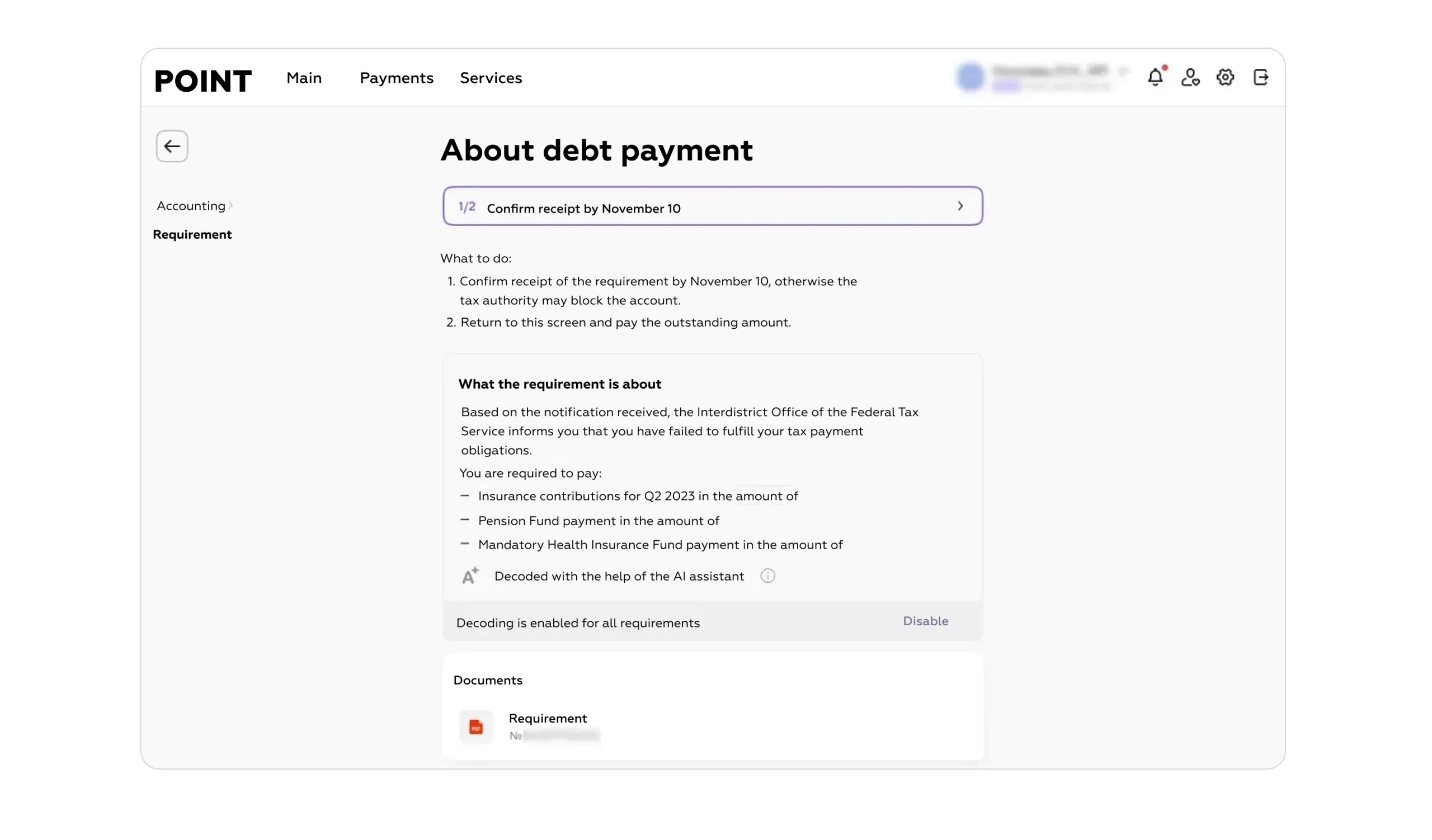
Rather than overwhelming users with all options at once, strong interfaces reveal advanced settings only when needed. This keeps everyday workflows fast while preserving flexibility for experienced users.
Business Internet Banking Rank 2025 shows that as business internet banking services expand, UX maturity across the market remains uneven. Some banks treat internet banking as a true operational workspace for entrepreneurs — supporting frequent tasks with clear navigation, predictable workflows, and strong system feedback. Others continue to grow feature sets faster than usability, which results in fragmented journeys, avoidable errors, and reduced trust in critical money-management scenarios.
Markswebb’s evaluation system helps teams turn complex UX into a structured improvement plan. It enables you to:
Investing in UX for business internet banking is not a cosmetic upgrade. It reduces friction in payments and approvals, lowers support load through clearer statuses and self-serve document access, and strengthens retention by making the service easier to rely on every day.
Contact us via WhatsApp, send an email, or fill out the form below to learn more.
We’ve evolved dozens of successful financial services and are eager to prove that our expertise can be implemented in other industries and around the world. Have a look at our success stories!
From research and analysis to strategy and design, we help our clients successfully reach their customers through digital services.


