
In many markets, investment services are shifting focus from giving users access to trading tools toward building ecosystems that guide and support them throughout the entire journey — from learning and risk awareness to making informed decisions.
The key challenge for InvestTech today is to make investing accessible and emotionally safe for beginners. Modern platforms increasingly combine educational design, behavioral support, and AI-driven automation to lower entry barriers and build trust in long-term investing.
At Markswebb, we have been studying InvestTech ecosystems across different markets, analyzing how global leaders help users feel confident and stay engaged. The examples in this insight come from our InvestTech Interface Database, where we collect and analyze hundreds of interface solutions from investment platforms worldwide to identify patterns that truly improve user experience and business outcomes.
Contents
Across markets, platforms are moving away from “toolbox-style” investing — where users must figure everything out themselves — toward guided, structured journeys. Instead of giving access to instruments and hoping users will know what to do, leading services now:
explain risks through contextual cues and micro-learning,
provide decision pathways instead of raw data,
use AI assistants to pre-analyze options and highlight reasoning,
adapt content and flows based on financial maturity.
This shift reflects a broader market transformation: investing is no longer seen as a niche activity for experts but as a mass-market financial behavior, where clarity and psychological comfort matter as much as access and pricing.
Modern InvestTech emphasizes rhythm and consistency. Platforms increasingly design for:
regular deposits,
recurring investment actions,
stability of emotional state during decisions,
and reduction of friction in multi-step journeys.
This perspective aligns investing with habit formation, encouraging users to maintain momentum over months and years rather than acting sporadically during market spikes.
Retention becomes less about reactivation triggers and more about forming a continuous sense of progress.
Trust is no longer treated as a static perception but as an outcome of interface behaviors:
showing how a recommendation is generated,
explaining fees or risks before they feel threatening,
visualizing future scenarios clearly,
integrating real-time sentiment and market signals transparently.
The most advanced platforms build trust not by offering guarantees, but by helping users understand what is happening and why — reducing perceived uncertainty at every step.
These global shifts lay the foundation for the practical patterns described below.
Before moving to specific examples, it’s important to note that these insights come directly from our ongoing global research. At Markswebb, we analyzed hundreds of investment platforms across different regions and identified recurring product patterns that consistently improve user confidence, decision quality, and long-term engagement. Below are some of the most illustrative practices from our InvestTech Interface Database — the ones that clearly demonstrate where the industry is heading and how leading services help users invest with clarity and emotional comfort.
Before offering products, leading investment platforms help users understand risks, basic principles, and the logic behind financial instruments. Onboarding becomes a form of micro-learning: short tips, videos, quizzes, and interactive sequences that reduce anxiety for beginners and encourage more deliberate behavior.
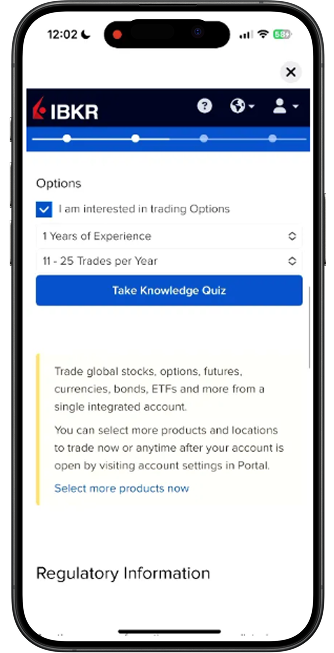
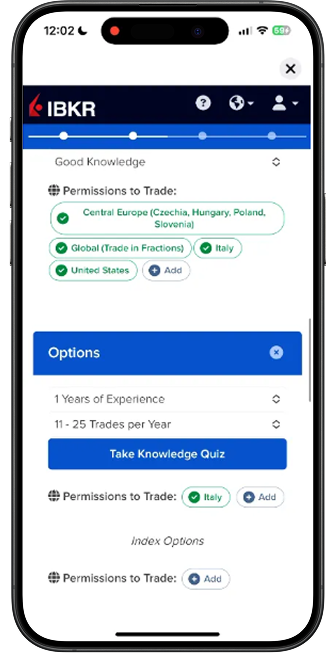
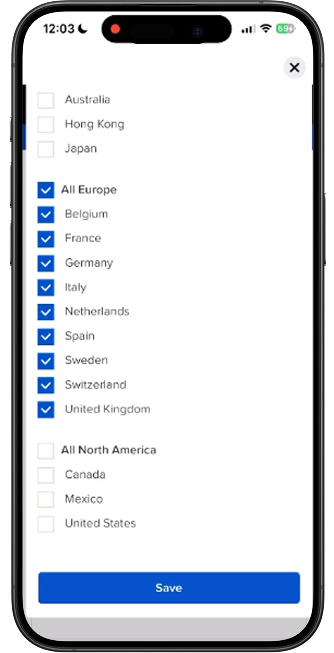
Allowing users to select preferred markets and instruments during onboarding increases early activity by tailoring the interface to their familiarity and interests. Investors can indicate which markets they want to work with, while the system adapts content and may offer a short knowledge check.


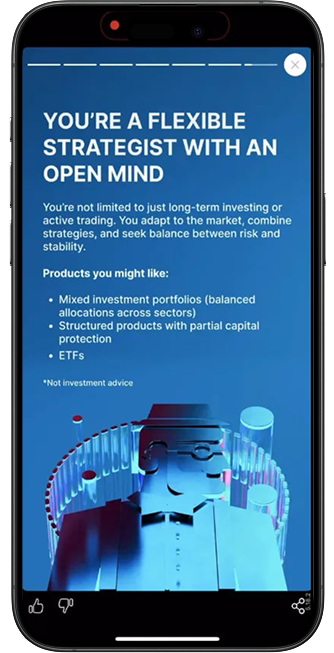
Investor-type quizzes—implemented through lightweight story formats—increase engagement and conversion to product use by offering personalized asset recommendations. In the “Ideas” section, users answer a series of guided questions to identify their investor profile. The result includes a clear description and a curated set of suitable assets.
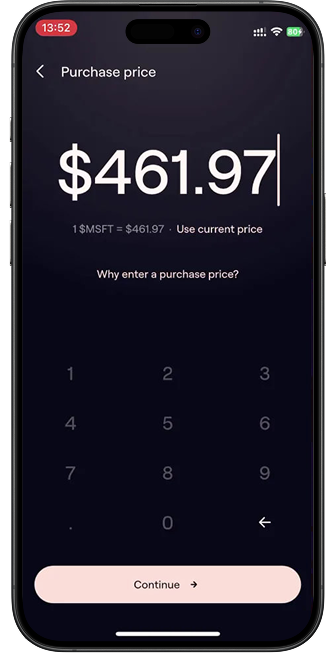
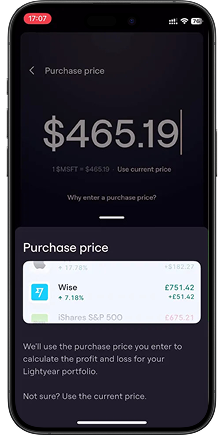
Displaying the original purchase price when assets are transferred makes long-term portfolio analytics more accurate and strengthens trust. For example, when transferring holdings to Lightyear, users can enter the initial buy price and instantly see lifetime gains or losses, creating a more complete and transparent view of portfolio performance.
AI increasingly supports investors by analyzing behavior, suggesting suitable instruments, forecasting potential returns, and even interpreting a user’s emotional context during decision-making. These solutions are especially valuable in markets with many first-time investors, where guidance at each step reduces uncertainty and improves confidence.
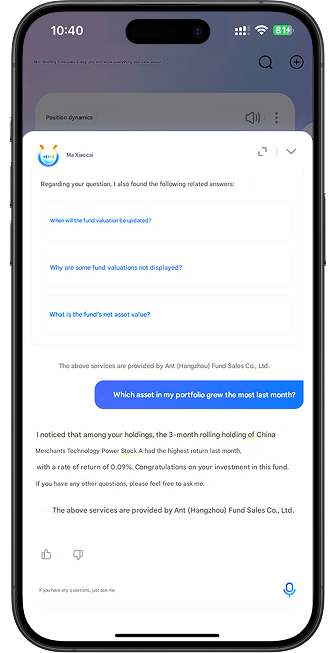
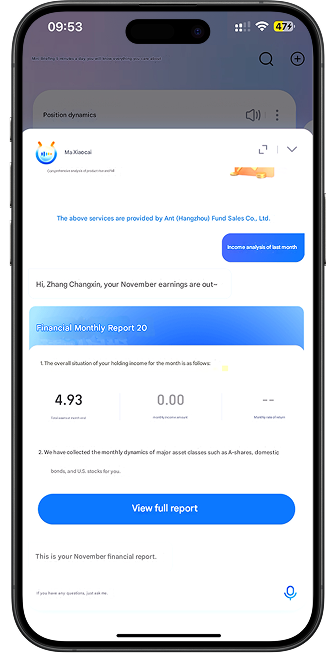
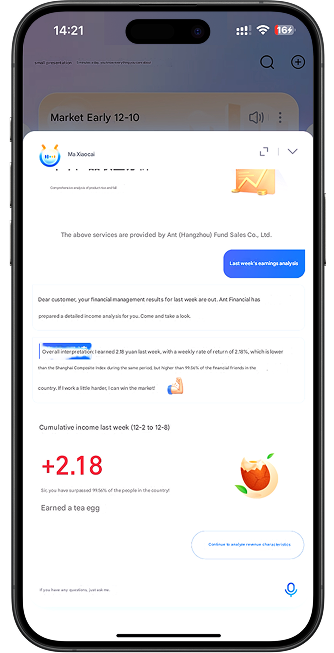
Personalized performance notifications stimulate activity through relatable comparison metrics. The assistant highlights the most profitable asset in the user’s portfolio and sends contextual analytics. Example: “You’ve earned 2.18 yuan — enough to buy a tea egg.” This blend of data and relatable framing increases engagement and reactivation.
Modern investment apps are shifting from product-centric to goal-centric models, enabling users to invest toward life goals such as buying a home or funding a child’s education. This approach brings the interface closer to real user motivations, increasing engagement and making investment actions feel purposeful and less abstract.
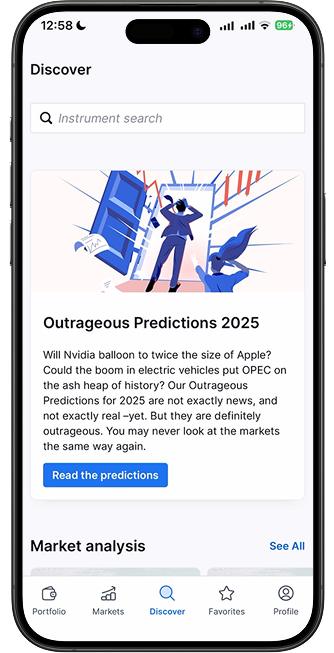
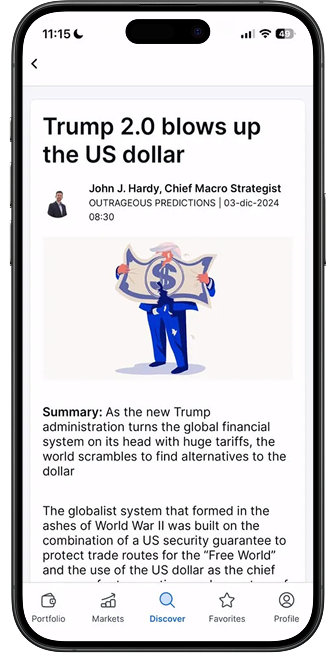
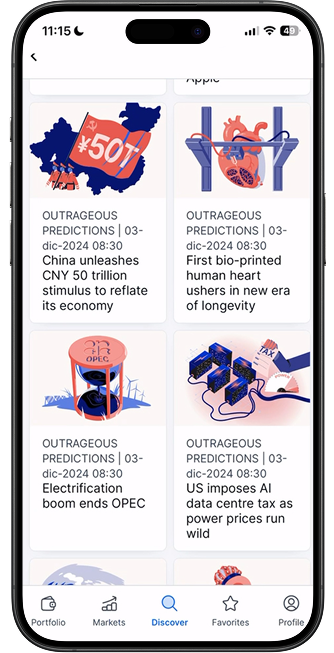
Unusual forecasts and narrative-driven predictions create emotional resonance and draw users into the investment journey. “Outrageous Predictions” present bold hypothetical scenarios about markets and the global economy—not as official forecasts, but as engaging thought experiments that capture attention.
Example: a scenario predicting that a new U.S. administration disrupts global finance through extreme tariffs, prompting a global search for alternatives to the dollar.
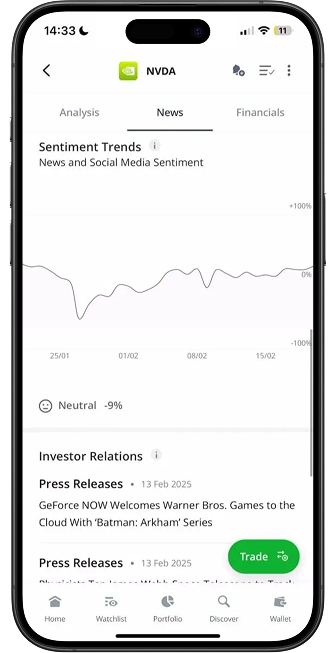
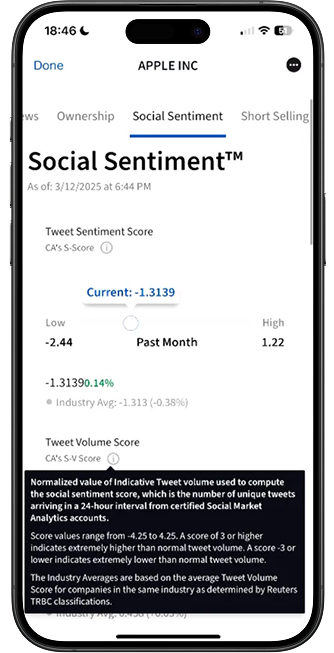
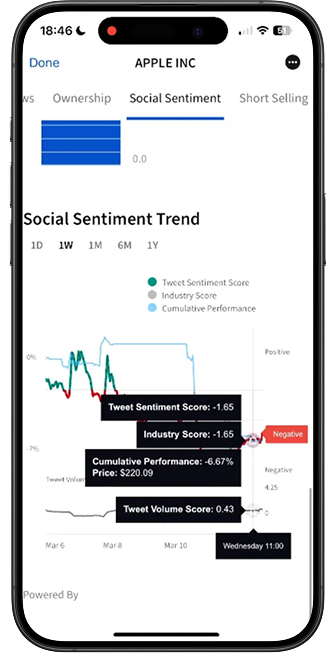
Social sentiment indicators support decision-making, increase trading frequency, and extend session time. In eToro, the asset-description page includes a sentiment graph aggregating social-media and news trends. Interactive Brokers offers a similar tool based on Twitter sentiment analysis, allowing users to assess market mood before acting.
The evolution of InvestTech shows a clear shift from execution to empowerment.
Modern platforms no longer focus solely on enabling transactions — they help users understand, plan, and make decisions with confidence. Education, automation, and personalization form the foundation of emotionally safe and transparent investing, where users feel supported at every step.
This shift is not only about better UX — it’s about long-term trust and sustainable growth. Platforms that integrate guidance and emotional intelligence into their interfaces are more likely to build loyalty and maintain active investor engagement over time.
As part of Markswebb’s ongoing efforts to support digital banking and investment strategies, we help product and CX teams:
If you want to systematically apply these insights in your own product, explore our databases or contact us to learn how we can help your team use global UX best practices to accelerate growth.
We respond to all messages as soon as possible.
We’ve evolved dozens of successful financial services and are eager to prove that our expertise can be implemented in other industries and around the world. Have a look at our success stories!


