
Insurance is no longer a service customers interact with only when buying a policy or facing an insured event. Digital insurance is evolving into a broader service environment: it can help customers anticipate risks, manage coverage, receive proactive support, and see more value in the products they already have.
A European bank-owned insurance company turned to Markswebb to understand which digital insurance trends and cross-industry practices could strengthen its product experience and create a competitive advantage. The goal was to identify practical growth opportunities for renewals, cross-sell, customer engagement, and service value.
In this case, we explain how Markswebb built a digital trend map for an insurance company: from cross-industry trendwatching and market examples to product-level recommendations, prioritization criteria, and backlog ideas for renewals, cross-sell, engagement, and retention.
Contents
The client asked Markswebb to identify product, technology, and service solutions that could improve the customer experience in mobile apps and PWA channels.
The research focused on digital mechanics that could influence key business metrics:
To answer this, it was important to understand which trends already exist in digital services, which of them have proven relevant in insurance, which are still emerging, and which could become a source of future competitive advantage.
The client also needed to know where to find strong implementation references and how these practices could be adapted to its own product ecosystem.
A separate focus was placed on the value of digital insurance trends for specific product lines: voluntary health insurance, motor third-party liability insurance, comprehensive motor insurance, travel insurance, accident insurance, and property insurance.
For each product area, Markswebb needed to connect trends with real customer scenarios and business goals.
As a result of the research, the client received a trend navigation map showing how different digital practices could influence business metrics, how difficult they would be to implement, and which insurance products and scenarios they could support.
The project delivered several practical outputs for the client’s product and digital teams. The final digital trend map worked as a product navigation tool: it connected trends, customer scenarios, business metrics, implementation complexity, and market references
Markswebb mapped the points in the customer journey where the digital service could create more value: from product discovery and purchase to policy management, support, prevention, renewal, and cross-sell.
This helped the team see where customer experience could be strengthened and which scenarios had the highest potential for product improvement.
The research covered 18 digital services from 7 industry areas. Markswebb analyzed how different companies already use mechanics of engagement, support, personalization, complex product management, and risk prevention.
This gave the client a broader view of practices that could be adapted for insurance.
The recommendations were linked to the logic of specific insurance products:
For each product line, Markswebb identified which trends and mechanics could support relevant customer scenarios and business goals.
The client received a map of 6 digital trends with an assessment of their market maturity, innovation potential, possible economic effect, risks, and implementation complexity.
This helped the team compare ideas not only by attractiveness, but also by feasibility and expected impact.
Markswebb separated the ideas into several levels of priority: what could be considered for the nearest backlog, what should be tested through pilots, and what required longer preparation because of technological, regulatory, or operational risks.
For each relevant practice, the client saw how the mechanic works in a real digital interface: where the entry point is placed, how the scenario is structured, which actions are available to the user, and why the solution can be useful in an insurance product.
The recommendations were connected with business metrics: higher renewal conversion, stronger cross-sell potential, deeper customer engagement, improved retention, and reduced support workload.
In addition to strategic directions, Markswebb prepared a separate set of quick UX improvements for everyday customer scenarios. These were smaller product ideas that could be evaluated faster and added to the backlog with less implementation effort.
The research scope included 18 digital services from different industries and markets.
картинка
A broad research scope expanded the field of possible solutions for the client. It helped the team look beyond familiar market practices and identify ideas that could support a more complete digital insurance experience across the entire customer journey.
For digital insurance development, it is not enough to look only at other insurance companies. Customer expectations are shaped by banks, fintech services, healthcare platforms, e-commerce, mobility apps, and other everyday digital products. This is why the trend map combined insurance-specific practices with solutions from adjacent industries that could be adapted to insurance logic.
Different industries gave the client different types of references:
To select the most relevant trends and best-practice references across this broad scope, Markswebb experts assessed how each finding could be applied to specific insurance products and scenarios.
The team evaluated practical value through real customer tasks: where a solution could strengthen product purchase, claim submission, interaction with the insurer and service providers, policy management, or customer support.
The client’s position was clear: to stay ahead in the local market, the company needed to look beyond the insurance industry itself. Digitalization and automation are reshaping customer expectations across all service categories, and familiar experiences in banking, fintech, and other digital products increasingly define what users expect from insurance services as well.
Markswebb trendwatching helps digital teams look into services across global markets and understand which practices can be transferred to their own product context.
For more than 8 years, Markswebb has researched international digital markets. Today, our expertise covers 110+ apps from 35+ countries, from the US and Brazil to Germany, Israel, India, and Singapore. For each project, we define the research scope together with the client: relevant markets, industries, segments, and specific services.
This expertise helps us see where new digital practices appear, how they move between regions and industries, and which solutions gradually become part of the expected digital experience.
In this project, the approach helped the client collect digital trends and turn them into a structured map of initiatives with a clear application logic.
For the business, this approach solves several tasks.
The team receives proven references faster and can move from searching for ideas to discussing specific product solutions.
Trends are assessed through scenario relevance, implementation complexity, risks, and potential influence on business metrics.
The client sees practices from other countries and industries that can become a source of competitive advantage. For digital product teams, trendwatching becomes useful when it results in a structured trend map with clear product logic, not a collection of abstract innovation signals
Product, CX, marketing, and management teams receive a common view of opportunities and can discuss service development at the same level of detail.
For the client, Markswebb assessed each trend by the strength of the idea, its influence on product effectiveness, and its business potential.
The results were presented as a decision-making map that helped compare trends and prioritize further product work.
The assessment included several axes:
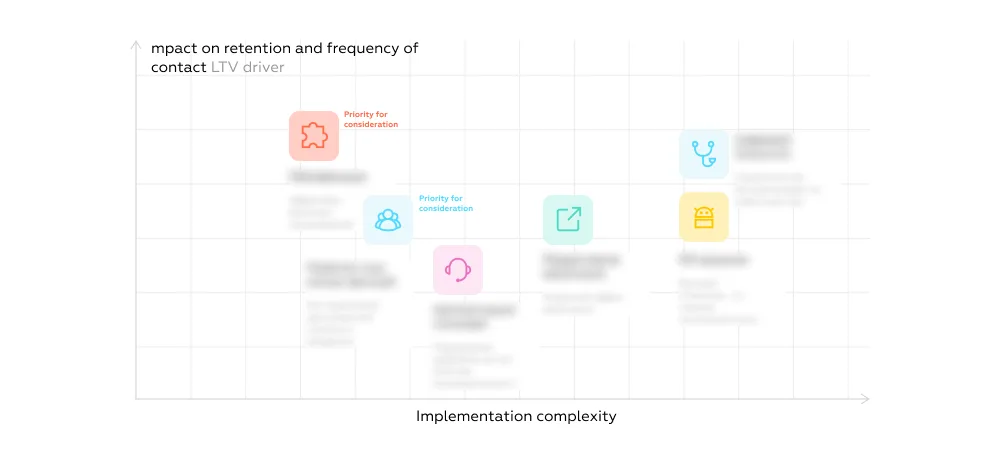
The digital trend map gave the client a clear coordinate system for working with future development directions.
Some directions could be considered for near-term development: they were already mature enough, clear for users, and potentially useful for renewals, engagement, or support workload reduction.
Other directions were more strategic. They had higher innovation potential, but required additional data, technical preparation, risk assessment, and pilot testing before implementation.
This assessment can support product prioritization. Based on the trend map, the team can understand where to look for quick impact in digital channels, which trends can strengthen the long-term value of insurance products, and which ideas should be tested carefully before scaling.
After assessing the trends, Markswebb described how each direction could work in specific insurance products:
The same trend can create different value depending on the product and customer scenario.
In voluntary health insurance, predictive mechanics can help customers book a check-up on time, contact a doctor, or expand their coverage. In motor insurance, similar mechanics can remind customers about renewal, support risk prevention, or guide them in a critical situation.
This product-level analysis helped connect digital trends with concrete growth points for insurance. Markswebb assessed where each solution could influence renewals, cross-sell, engagement, and frequency of contact with the service.
For example, mechanics from banking and fintech provided references for chatbots and smart search. Retail practices showed how product settings can be transferred or shared with another person, which can be useful when insurance is purchased for a family member or a group.
For each recommendation, Markswebb selected a market example so the client’s team could see the mechanic in a real interface: where the entry point is placed, how the scenario is structured, which actions are available to the user, and how the solution can influence business metrics.
Each example was adapted to insurance logic.
This is especially important for digital insurance. A mechanic from banking, fintech, or retail cannot simply be copied into an insurance product. It needs to be connected with a specific policy, customer scenario, risk, moment of interaction, and business goal.
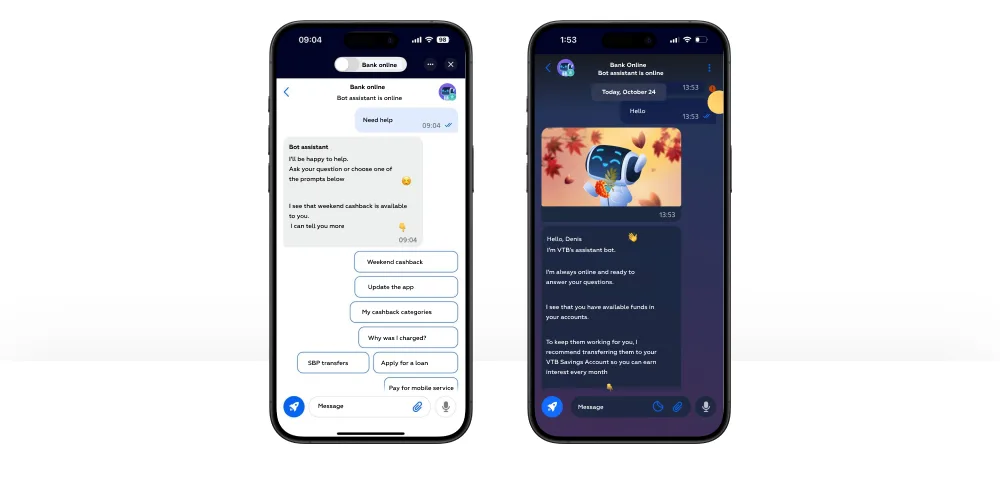
A chatbot example from a banking service showed how a digital product can suggest relevant actions at the moment of customer interaction.
For an insurance service, this mechanic can work in renewal and policy purchase scenarios. The bot can take into account the context of active products, remind the customer about renewal, or suggest an insurance product related to the current request.
This can help increase renewal and cross-sell conversion when the offer is relevant and connected with the customer’s current task.
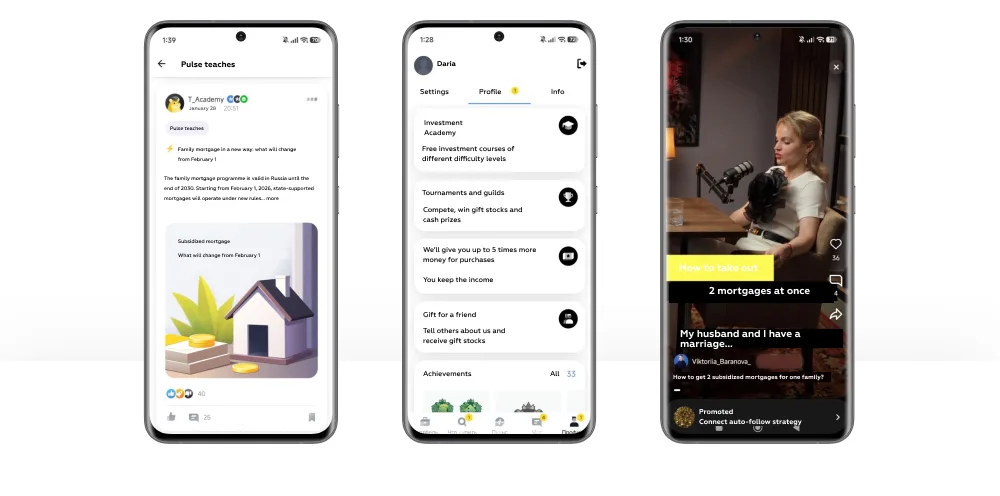
An investment service example showed how expert content can become part of a product scenario.
In insurance, a similar section can combine personalized offers, partner discounts, product explainers, and answers to frequent questions. Content can be linked to relevant calls to action: for example, travel-related materials can lead to travel insurance, while health-related content can support voluntary health insurance renewal or coverage expansion.
In this logic, content works not only as communication, but also as a tool for engagement, trust, and additional sales.
In addition to large-scale trends, Markswebb prepared a separate set of recommendations aimed at improving everyday user experience.
These ideas were not necessarily global trends, but they could be implemented faster and measured in specific scenarios: policy management, insurance purchase for a family or group, control of important dates, or assistance in a critical situation.
For the client, this block became a source of quick product ideas. These features could enter the backlog faster and strengthen existing scenarios without launching major product transformation.
Within the project, these quick UX improvements complemented the trend map: major directions defined the strategic vector, while smaller improvements showed how to make the digital insurance service more useful in daily customer tasks.
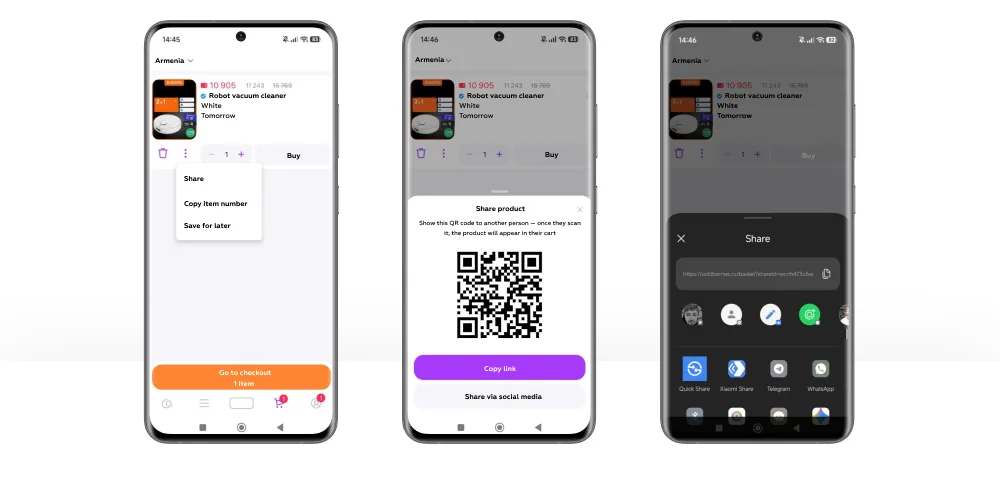
A retail service example showed how the mechanic of sharing a ready-made cart can be adapted to insurance.
A user selects policy conditions, for example for travel insurance, and sends a link or QR code to another person. The recipient immediately opens the same draft with preselected conditions and can proceed to purchase without searching for the product or setting up the parameters again.
For an insurance service, this mechanic is especially useful in family and group scenarios: trips, policies for relatives, or identical coverage for several participants.
It shortens the path to payment and can increase purchase conversion by transferring an already prepared insurance draft to another customer.
Based on the research results, the client selected 8 major directions for further work. These initiatives became part of the company’s product agenda for strengthening digital customer experience and creating new ways to interact with insurance products.
The digital trend map helped the team expand its strategic horizon and identify new challenges: ideas that can reshape the digital insurance experience and offer customers qualitatively new solutions, often requiring new technological approaches.
A digital trend map helps companies turn trendwatching into a practical development tool: see what can be implemented, why it matters, and how each idea can support business growth
This case shows how looking beyond the familiar market can help a digital team set more ambitious goals and receive a practical map for achieving them: priorities, backlog references, scenario logic, and a clear understanding of business value.
Trendwatching can help digital product teams:
For insurance companies, this approach helps transform trend monitoring into a practical development tool. Instead of collecting abstract innovation signals, the team receives a structured view of what can be implemented, why it matters, and how each idea can support business growth.
Every year we conduct up to 15 studies of digital services. These are industry benchmarks that reflect the state of the market and trends.