
Chatbots have become a default entry point to customer support in digital services. They promise faster response times, lower operational costs, and round-the-clock availability. For product teams, chatbots often look like a clear win: scalable, efficient, and easy to integrate into existing support models.
Yet despite widespread adoption, user attitudes toward chatbots remain polarized. Alongside users who rely on them for routine tasks, there is a significant group that actively avoids chatbot interactions whenever possible. These users expect misunderstandings, irrelevant answers, and additional effort — and often prefer to wait for a human agent rather than engage with an automated dialogue.
This gap between business expectations and user perception raises an important question: why do chatbots still trigger resistance, and what exactly separates frustrating chatbot experiences from those that users trust and return to? To answer this, Markswebb conducted a focused UX study exploring how conversational design influences user attitudes — and what helps turn chatbot skeptics into advocates.
Contents
The study aimed to move beyond surface-level satisfaction metrics and examine chatbot interactions from the user’s perspective — especially through the lens of those who are predisposed to dislike them. The primary research goals were:
To achieve this, we combined two complementary research tracks.
First, we conducted a comparative UX analysis of business chatbots across common user scenarios. The evaluation focused not only on feature availability, but on conversation quality: how clearly the chatbot understands requests, how actionable its responses are, and how much effort is required from the user to reach a result.
Second, we ran in-depth interviews with users who described themselves as chatbot skeptics. Participants were asked to recall real interactions, explain their expectations, and describe how they adapt their behavior when forced to communicate with a bot. This qualitative layer helped reveal mental models, coping strategies, and emotional triggers that are not visible in interface audits alone.
Together, these methods allowed us to look at chatbots not as technical systems, but as communication interfaces — where language, structure, and transparency are just as critical as automation and AI capabilities.
Chatbot skeptics are not users who reject digital services or automation in general. On the contrary, most of them actively use mobile apps, online support, and self-service tools. Their resistance is shaped not by technology itself, but by repeated negative experiences with conversational interfaces.
Across interviews, skepticism was rooted in predictability. Users expected that a chatbot would fail to understand their request, offer generic or outdated answers, or push them through a rigid menu that does not reflect their real problem. As a result, chatbot interactions were perceived not as time-saving, but as an additional obstacle on the way to resolution.
One of the strongest triggers of frustration was the gap between user intent and chatbot interpretation. Even when users formulated requests clearly, they often received responses that addressed a different topic or required several clarification steps. Over time, this eroded trust and led users to assume that “the bot won’t help anyway.”
Rather than abandoning digital channels altogether, chatbot skeptics develop coping strategies. Many consciously simplify their language, avoid complex or contextual queries, and reframe requests into what they believe the bot can process. Others divide tasks into two categories: “simple enough for a chatbot” and “requires a human,” bypassing the bot entirely for the latter.
Some users intentionally choose slower channels — such as email or phone support — because they associate chatbots with uncertainty and wasted effort. Importantly, this behavior is not driven by habit alone, but by rational cost–benefit calculations: users prefer predictability over speed.
These adaptations highlight a key insight: when users have to adjust their behavior to fit the chatbot, the chatbot has already failed as an interface.
User attitudes toward AI-powered chatbots were mixed. Some participants appreciated personalization and contextual responses when they worked reliably. Others expressed discomfort with opaque AI logic, especially when the system’s capabilities and limitations were unclear.
What mattered most was not whether the chatbot used AI, but whether its behavior felt transparent and controllable. Users were more tolerant of limited functionality when boundaries were clearly communicated, and less forgiving of advanced systems that produced confident but incorrect responses.
In this sense, skepticism was rarely about technology level. It was about trust — built through consistency, clarity, and respect for the user’s time.
For chatbot skeptics, trust is not built through claims about AI or automation. It emerges — or collapses — within the first few turns of dialogue. Even technically advanced chatbots fail if the conversation feels confusing, effort-intensive, or misaligned with the user’s intent.
Our research showed that users evaluate chatbots less as “smart systems” and more as communication partners. They expect clear structure, predictable logic, and a sense that the system is guiding them toward a concrete outcome. When these expectations are not met, frustration accumulates quickly — often within seconds.
This makes conversational design a critical layer of chatbot UX. It is not an aesthetic or secondary concern, but the primary mechanism through which users judge usefulness, reliability, and respect for their time.
One of the most consistent findings across scenarios was the importance of concise, structured responses. Long text blocks, abstract explanations, or overly polite filler language increased cognitive load and slowed decision-making.
Chatbots that earned higher user trust relied on:
Importantly, clarity did not mean oversimplification. Users were comfortable with complex tasks as long as information was presented progressively and in context. When the chatbot explained why a step was needed — and what would happen next — users felt more confident continuing the interaction.
Another key factor was how chatbots handled user input. Skeptical users were especially sensitive to situations where a chatbot failed silently or responded with generic “I didn’t understand” messages.
More effective designs reduced friction by preventing errors rather than reacting to them. This included:
These elements shifted responsibility back to the interface. Instead of forcing users to guess how the chatbot “thinks,” the chatbot actively guided them toward successful interaction patterns.
Trust increased significantly when users felt in control of the conversation. This was most visible in two areas: escalation to human support and clarity around chatbot limitations.
Users responded positively when:
Conversely, hiding escalation options or presenting the chatbot as more capable than it actually was amplified frustration. Transparency, even about limitations, proved to be a stronger trust signal than technical sophistication.
One of the key differences revealed by the study was how chatbots position themselves within the user journey. In many cases, chatbots still operate as navigational layers — helping users find information, links, or instructions, but stopping short of actually solving the problem.
For users, this creates a familiar pattern: the chatbot explains what needs to be done, but not does it. The interaction often ends with redirection to another interface, a form, or a human agent. While this approach may reduce load on support teams, it rarely changes user attitudes toward chatbots.
Skeptical users were especially critical of such experiences. For them, being redirected after several dialogue steps felt like wasted effort rather than assistance.
In contrast, chatbots that enabled end-to-end task completion were perceived very differently. When users could not only ask a question but also resolve their issue within the same conversation, their evaluation of the chatbot shifted noticeably.
Examples of high-impact capabilities included:
Even when functionality was limited, the ability to reach a clear, final outcome within the chatbot increased perceived usefulness. Completion mattered more than speed or conversational flair.
Complex tasks posed a particular challenge. Rather than attempting to fully automate them, more mature chatbots broke these scenarios into manageable steps. They combined short explanations with clear next actions and allowed users to pause, clarify, or switch channels without losing context.
This approach reduced anxiety around “getting stuck” and reinforced the feeling that the chatbot was supporting the user — not testing them.
Notably, users were more forgiving of slower or more structured flows in complex scenarios than of fast but opaque interactions. Predictability and progress visibility outweighed raw efficiency.
These differences point to a broader shift in user expectations. As digital services mature, users no longer perceive chatbots as experimental or optional features. They compare them to other interfaces within the same product — and judge them by the same criteria.
When a chatbot behaves like a true service layer, capable of completing tasks and respecting user intent, it stops being perceived as a barrier. Instead, it becomes a legitimate entry point into the product experience.
For chatbot skeptics, positive experiences rarely come from emotional tone, branding, or friendly language alone. What changes their attitude is confidence — the sense that the system will behave predictably and help them reach a result without unnecessary effort.
The most effective chatbots in the study followed a shared set of design principles. While implementations differed, these patterns consistently reduced friction and increased perceived reliability.
Successful chatbots made the purpose of each interaction clear early on. Instead of starting with open-ended prompts, they framed conversations around achievable outcomes and guided users toward them.
This included:
By reducing uncertainty, these elements helped users feel oriented and in control — a critical factor for those who already expect failure.
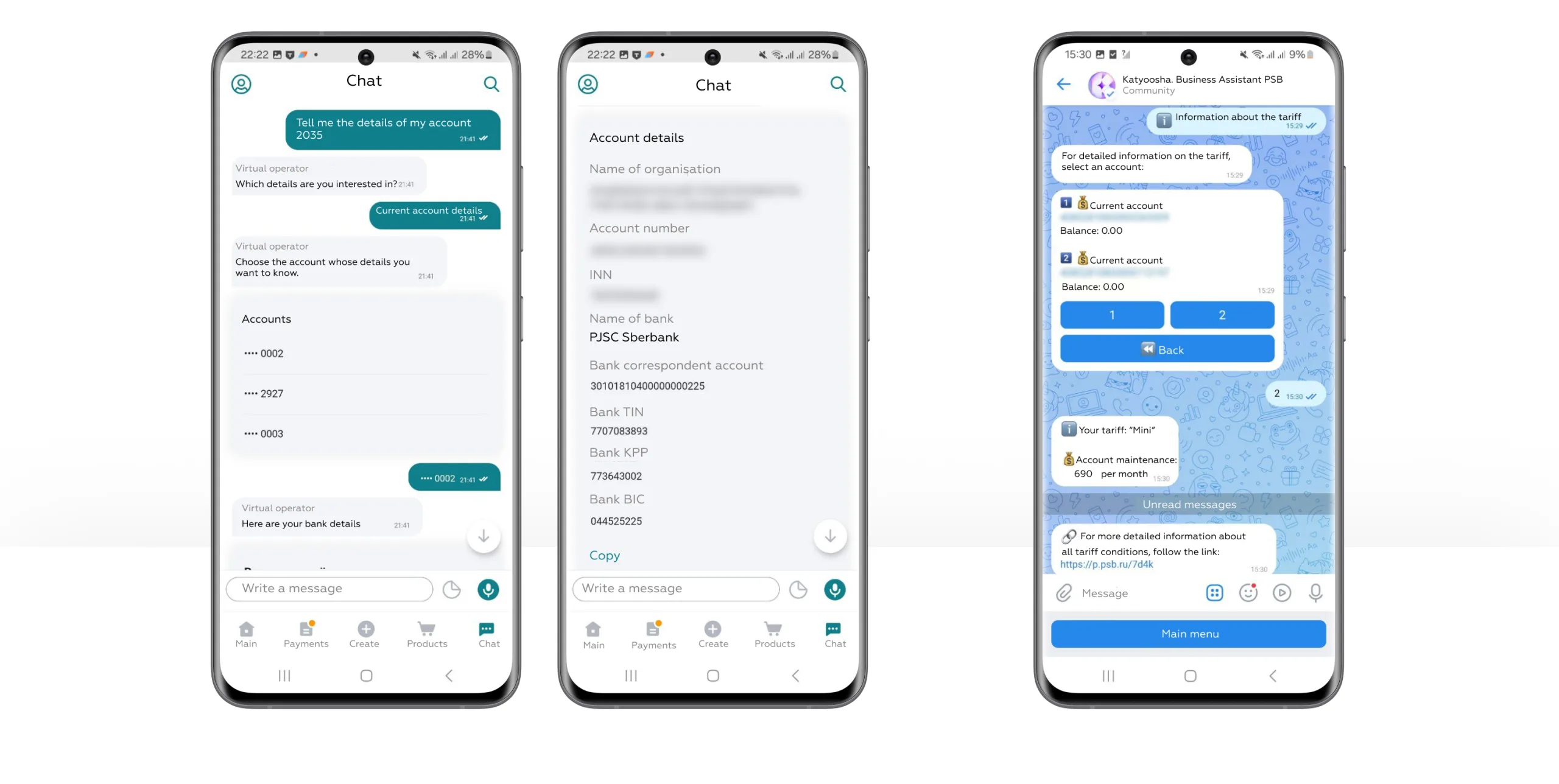
Structure played a larger role than conversational tone. Chatbots that relied on well-organized content were easier to trust, even when handling complex tasks.
Effective patterns included:
These choices minimized reading effort and decision fatigue, allowing users to focus on the task rather than on interpreting the interface.
One of the clearest differentiators was whether the chatbot responded with instructions or results. Skeptical users reacted negatively to responses that told them what to do elsewhere.
In contrast, trust increased when the chatbot:
Even partial automation — when combined with clear handoff to another channel — was perceived more positively than purely informational replies.
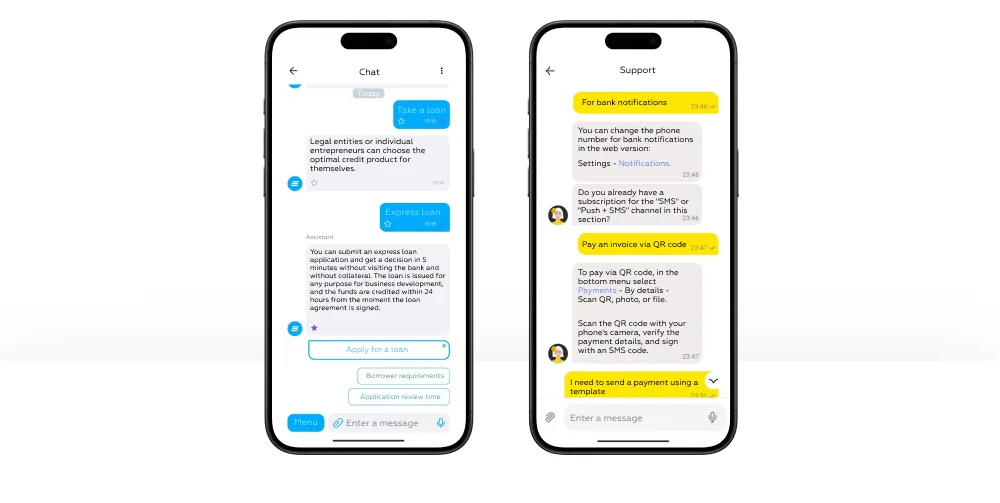
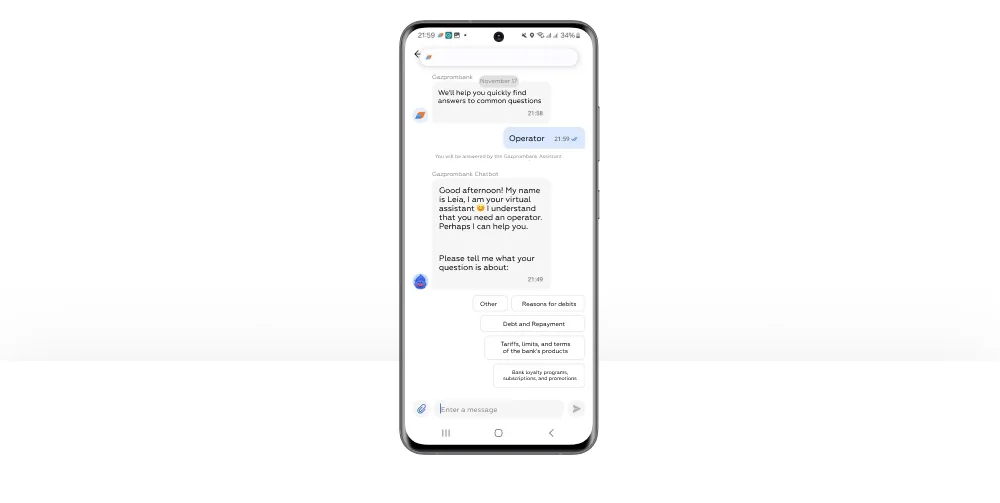
Access to human support was not a failure signal for users. On the contrary, chatbots that treated escalation as a natural part of the flow were evaluated more positively.
Design choices that worked well included:
This approach reframed the chatbot as a helpful guide rather than a gatekeeper.
One of the key risks identified in the study is a mismatch between how teams evaluate chatbots and how users experience them. Chatbot success is often measured through operational metrics: containment rate, average handling time, or cost reduction. While these indicators matter for the business, they say little about whether the chatbot actually helps users.
For skeptical users, a chatbot that technically “contains” a request but fails to resolve the underlying problem still counts as a negative experience. Over time, this leads to learned avoidance — even if the system appears successful on paper.
This gap suggests that conversational UX should be evaluated not only through efficiency metrics, but through outcome-based and experience-driven criteria.
Skeptical users are less patient than neutral or optimistic ones. Their trust is shaped almost entirely by the first interaction. If the chatbot fails to understand the initial request or provides a generic response, users rarely give it a second chance.
From a strategic perspective, this makes first-contact success critical. Teams should prioritize:
Improving first-contact performance often has a larger impact on perception than expanding the chatbot’s feature set.
Another recurring insight was the importance of clearly communicating chatbot boundaries. Users were more tolerant of limited functionality when expectations were set upfront.
Explicitly stating what the chatbot can and cannot do helps prevent frustration and builds credibility. In contrast, overpromising capabilities — especially in AI-powered systems — amplifies disappointment when errors occur.
Strategically, this requires alignment between product messaging, interface copy, and actual system behavior.
Finally, the study highlights the need to stop treating chatbots as secondary or experimental features. For many users, the chatbot is the first — and sometimes only — point of contact with support.
This means chatbot UX should be designed, tested, and iterated with the same rigor as other critical interfaces. Conversational flows, error handling, and escalation paths deserve the same attention as navigation, forms, or transactional screens.
When chatbots are treated as a core interface rather than a cost-saving layer, their impact on trust and satisfaction becomes significantly more predictable.
Chatbots are no longer a novelty. For many digital services, they have become a default support interface and a critical part of the overall customer experience. Yet widespread adoption has not eliminated user skepticism — largely because many chatbot implementations still prioritize efficiency over real problem-solving.
Markswebb’s research shows that negative attitudes toward chatbots are rarely driven by resistance to technology itself. Instead, they stem from poor conversational UX: unclear structure, low task completion rates, and a lack of transparency and control. When users are forced to adapt their behavior to the chatbot, trust breaks down quickly.
The path from skepticism to advocacy lies in treating chatbots as communication interfaces, not just automation tools. Clear conversation structure, visible outcomes, guided input, and respectful escalation to human support transform chatbots from obstacles into reliable entry points for service.
For product teams, the implication is clear. Investing in conversational design and user-centered evaluation is not about making chatbots sound more human. It is about making them more useful — and aligning them with how users actually think, decide, and act.
Contact us via WhatsApp, send an email, or fill out the form below to learn more.
Every year we conduct up to 15 studies of digital services. These are industry benchmarks that reflect the state of the market and trends.